BLEEDING FOR SOMETHING REAL: THE DEATH AND REBIRTH OF SUBCULTURE
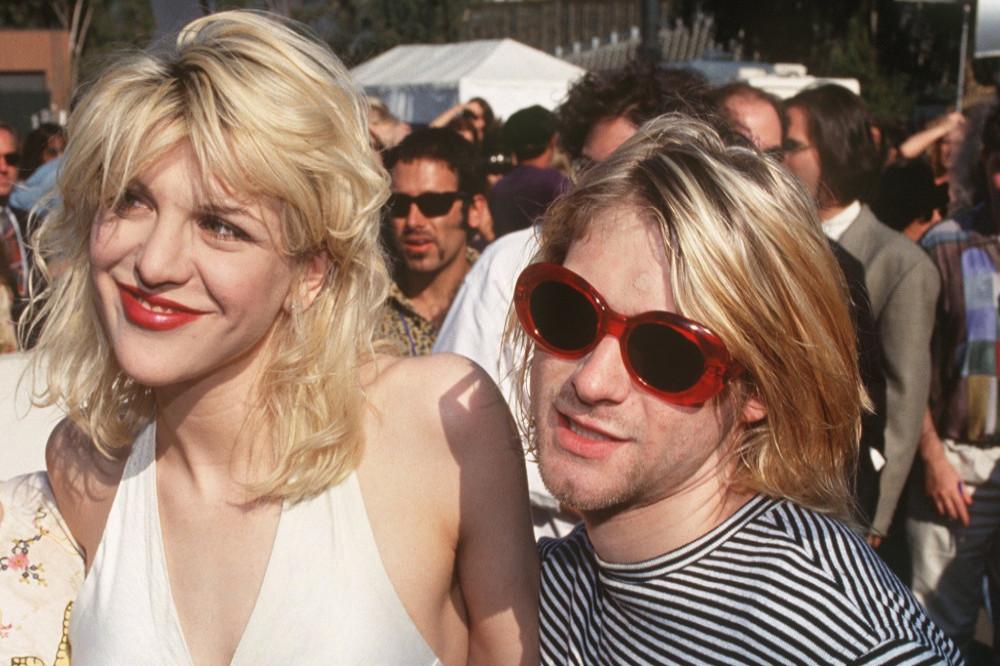
Subculture was never just about music or clothes for me. It was a survival mechanism through my teens that led the way into adulthood. It was a way to declare, in no uncertain terms, that you didn’t belong and you didn’t want to. I was never quite like my mates. While everyone else was swooning over the popular lads and chasing trends like Fruit of the Loom and Sweater Shop jumpers, I couldn’t think of anything worse. I was into all sorts, grunge especially. I adored Courtney Love and Kurt Cobain, but even then, I avoided the mainstream hype and gravitated toward their earlier, rawer work.
That instinct hasn’t changed. I’ve always preferred a big band’s rough beginnings over their polished chart-toppers. It’s not about being contrarian, it’s about seeking something deeper, more sincere, more emotionally raw. I remember the fear that hit me when Biffy Clyro started getting bigger, would they go full Kings of Leon and betray us? Same with Fontaines D.C., though I think we’re safe there. I was also drawn to the Mods, the ones who stood for something. Bonus points if they had a scooter or a brother who played drums. Watching his band rehearse during lunch? That was my idea of romance.
Sociologically, subcultures are groups that form within a larger culture, bound by shared values, aesthetics, and rituals that deviate from the mainstream. They often emerge from youth movements, people from marginalised identities, or ideological resistance. But for some of us, they weren’t just a theory you could pick up, they were lifelines.
Subculture could be considered as tribal, sometimes inconvenient, and often ugly. It lived in garages, behind zines like this one, inside bootlegs and bruises. It wasn’t curated like most things are these days, but that doesn’t mean today’s youth aren’t trying. Some are clawing at the edges of something real, even if it’s buried under filters. The problem isn’t that they don’t care. It’s that they’ve inherited a culture that punishes sincerity and rewards performance. Many young people do care deeply, but are navigating a system that commodifies everything.
Subculture used to be a diagnosis. You didn’t dabble in it; you were consumed by it. It was the reason your mum cried when you shaved your head and started quoting Nietzsche at dinner. It was why you spent your weekends visiting Ian Curtis’s grave, drinking Stella, reciting ‘Dead Souls’ while contemplating the futility of love. It wasn’t cute. It wasn’t marketable. It was a lifestyle choice with consequences.
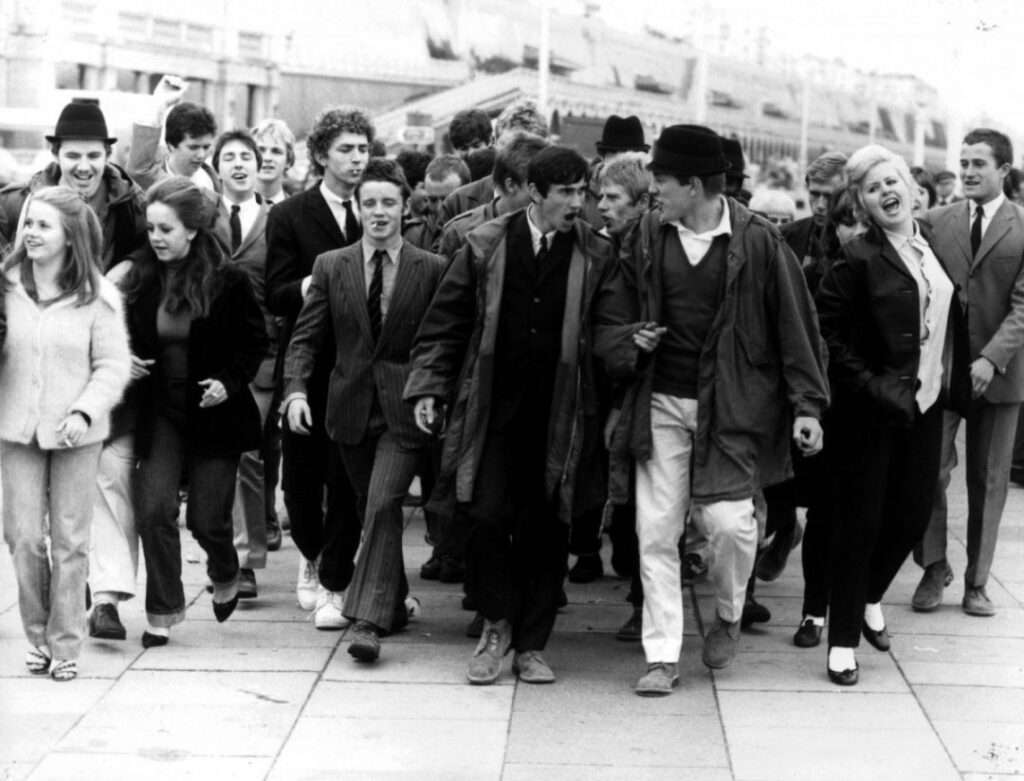
Take the Mods, for example. A subculture I fell straight into. Born in late 1950s London, they were working-class youths who dressed like they were headed to a Milanese art gallery, not a council estate like Munsbrough. They worshipped their tailored suits, the Italian scooters (got to be a Lambretta), and American soul records. They danced all night off their faces on amphetamines in basement clubs, rode their scooters like chariots, girls on the back and clashed violently with Rockers in seaside towns. It wasn’t just fashion, it was pure defiance. A rejection of post-war drudgery. A refusal to be ordinary. “Clean living under difficult circumstances,” they called it. And they meant it.
Now? Subculture is nothing more than a fleeting aesthetic. A mood you can wear for 48 hours before pivoting to something more nonchalant. You don’t need convictions anymore, you need a Depop account and a vague sense of ennui, for those who don’t know, Ennui is a French word that I’ve picked up recently, it describes a deep, lingering sense of boredom and dissatisfaction, more than just having nothing to do. It’s that hollow, restless feeling when life feels dull, unfulfilling, and emotionally flat. Think of it as the emotional fog that rolls in when everything feels pointless, even if things look fine on the surface.
So you’re not punk anymore, you’re “alt.” You’re not goth, you’re “dark-coded.” You’re not emotionally unstable, you’re “feral girl summer.” It’s all branding now. Even your breakdown has a colour palette. Even the punks have been domesticated. The emos have been absorbed into the Spotify algorithm and now exist solely as playlist titles like “songs that make me feel like a Victorian orphan with unresolved trauma.” Ravers are just people who wear mesh and talk about “liminal spaces” while queueing for overpriced horse tranquillisers.
It sometimes feels like subculture is dead. It used to be a rite of passage, brutal, petty, and weirdly sacred. You didn’t just join; you had to show up with sincerity, even when it was messy. Yes, you got mocked for mispronouncing Siouxsie, and yes, that cruelty stung. But beneath it was a hunger for something real, something earned. Still, let’s be honest: that hunger too often came at the expense of the vulnerable. The curious. The ones who needed it most. You couldn’t just be a punk, you had to bleed for it. And while that intensity built intimacy, it also built walls. Gatekeeping was the bouncer at the door of authenticity, but too often it slammed shut on the wrong people. There’s a difference between protecting culture and policing identity. One builds bridges. The other builds barriers.
Education plays into this too, reinforcing class divides where the rich are taught to see themselves as inherently superior, while the poor are often romanticised for their grit. I’ve written before about how the poor get called cool because they live visibly, emotionally, without polish, while the rich hover above, mistaking access for authenticity. Subculture was forged in that gap. It wasn’t a hobby, it was a necessity. The poor didn’t adopt a subculture to be edgy; they built it to survive through things most will never experience. Of course, not all rich kids were tourists; some bled for it too. But the system made it easier for them to leave unscathed.
But identity, sadly, has become a product. Subculture isn’t a community anymore, it’s a shelf in Urban Outfitters. You don’t need to feel it, just perform it. The algorithm doesn’t care if you’ve never heard of Jamie Reid; it just wants to know if your outfit matches the aesthetic. While some see it as bullying, others call it cultural preservation, but if it shames rather than teaches, it’s lost the plot. And maybe that’s fair, but then again, I can’t condone exclusion or bullying. Maybe the old gatekeepers were just bitter purists clinging to their vinyl collections like lifebuoys in this sea of digital chaos.
But something was lost, it’s undeniable. I’ve felt it for years. That sense of earned belonging. That weird, tribal intimacy. Now it’s all surface. All remix. All Pinterest moodboards. You don’t join a subculture, you borrow it, wear it for a week, and return it slightly wrinkled. People don’t live it, because the algorithm rewards surface-level engagement, not sincerity. Gatekeeping didn’t die because it was wrong; it died because it stopped teaching and started shaming. Also, it was inconvenient. And in a world where identity is curated for clicks, inconvenience is the first thing to go.
Another reason that could be argued quite rightfully is that when gatekeeping stops being about preserving meaning and starts being about policing access, it can morph into exclusion. It becomes a tool for shaming newcomers, mocking mistakes, and enforcing arbitrary standards of “authenticity.” That’s where it crosses into bullying. Bullying in this context isn’t always overt; it’s often subtle, coded in sarcasm or elitism. It’s the things like laughing at someone for mispronouncing a band name. Dismissing someone’s passion because they discovered it through TikTok instead of vinyl. Creating hierarchies of “realness” that punish curiosity and vulnerability. The irony of all this is that subcultures were often born from marginalisation. They were safe havens for the misfits, the emotionally intense, the ones who didn’t fit the mainstream mould. When gatekeeping turns cruel, it replicates the very exclusion those subcultures were meant to resist.
bell hooks once wrote that marginality can be a site of resistance, not just exclusion. That’s what subculture was for many of us, not a trend, not a costume, but a place to resist invisibility. A place where being too loud, too emotional, too intense wasn’t a liability, it was the point.
Who is bell hooks? bell hooks (1952–2021), born Gloria Jean Watkins, was a renowned American author, feminist theorist, and cultural critic. She wrote extensively about race, gender, class, and emotional honesty, often exploring how marginalised identities can be powerful sites of resistance. She stylised her name in lowercase to shift focus away from herself and toward her ideas. Her work like Ain’t I a Woman and Teaching to Transgress continues to influence conversations around identity, love, and liberation.
So yes, gatekeeping can preserve depth, but if it becomes a weapon to bash people with, doing so risks erasing the very spirit it claims to protect. Preserving depth shouldn’t mean policing identity. It should mean passing the torch, not guarding it with barbed wire. There’s a difference between cultural preservation and cruelty. The former educates and the latter humiliates.
Still, not everyone’s playing dress-up for the TikTok algorithm. There are kids out there who don’t care if their boots match the vibe, because they’re too busy building something that doesn’t need approval. You’ll find them in half-lit rehearsal rooms, soldering synths from scrap, or running DIY queer punk nights in venues that smell like damp and defiance. They’re not trying to be alt, they just are. Just noise, sweat, and a refusal to be fit in. It’s not nostalgia, it’s necessity. And while it’s not the dominant culture, it’s proof that sincerity didn’t die, it just went further underground.
In some circles authenticity is cringe. Irony is currency. And if you dare to care too much, you’ll be labelled “emotionally intense” and quietly unfollowed.
Once upon a time, it was cool to feel, to show your anger at the establishment, to love fiercely, but now it’s only if you could make it look effortless, tidy. Give just enough emotion to suggest depth, but never enough to demand accountability. You can cry, but only in grainy selfies with perfect lighting. You can also rage if you like, but only in captions, not get mad in real life.
Now, if you love recklessly (do not recommend), grieve loudly (I am great at this), or show up with your whole unfiltered self (always), you are a liability. “Emotionally intense.” A phrase that sounds clinical but means, hey, you are way inconvenient. You are now too alive for the feed. Too honest for the algorithm. So they quietly unfollow, not just digitally but spiritually. Because sincerity is confrontational. It asks others to feel, too. We now live in a culture that rewards detachment, so feeling everything is an act of defiance.
Even rebellion’s been repackaged. You don’t rage against the machine, you partner with it, drop a collab, and call it resistance. Your angst is now a marketing strategy. Your alienation is a niche. Your identity is a carousel of curated despair. You’re not lost, you’re lost “aesthetic.”
Like most things, Subculture isn’t dead; it’s just been gentrified and sanitised. There’s no sweat anymore. No risk. Just a carefully curated safe space. But somewhere, in the corners of the internet and the backs of pubs, some things don’t die. No curated playlists. No brand partnerships. Just raw emotion, bad lighting and the kind of honesty that makes people uncomfortable. My favourite. They reject performative sadness and embrace the real thing. It’s not trending. It’s not digestible. And that’s exactly the fucking point. You’ll find subcultures where the algorithm won’t look, where the amps are blown, and the feelings are too loud to be monetised. It’s not curated, it’s chaotic. It’s not aesthetic, it’s survival. And for those still bleeding for something real, that’s more than enough.