IS THE MYTH OF THE SELF MADE ARTIST A LIE?
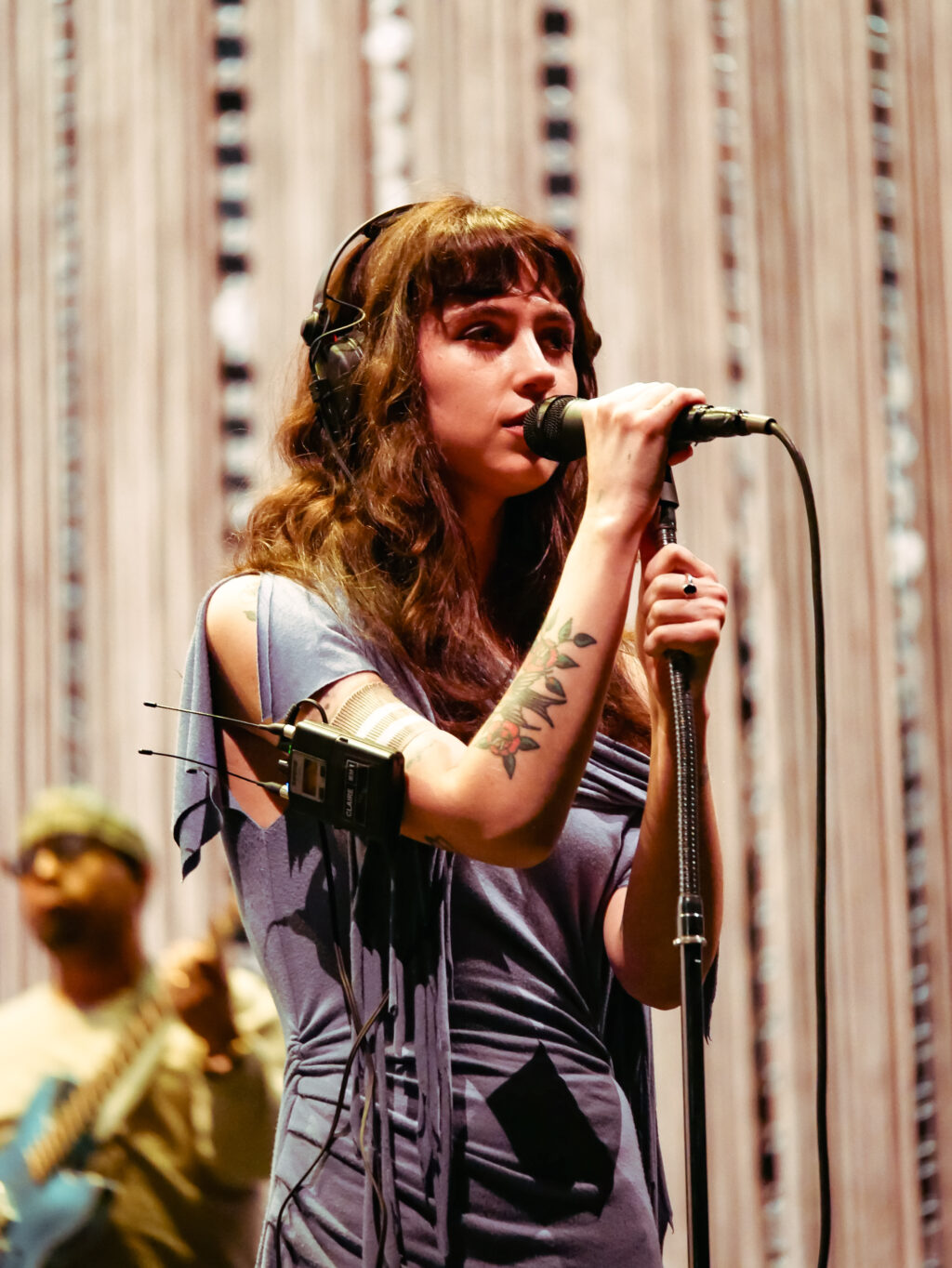
Clairo (Abi Chilton/Northern Exposure)
We love the story of the tortured genius who rises from obscurity. But in today’s music industry, that narrative is more branding than truth. This piece explores how inherited privilege, algorithmic gatekeeping, and curated hardship distort our understanding of authenticity and why certain artists who’ve managed to break through and gain media coverage matter more than ever.
Sometimes I think they sell misery as a genre. The penniless poet. The street performer survives on borrowed couches, weaving melodies into the noise of London’s daily grind. The solo producer straight out of the bedroom. The girl who writes rhymes in her journal, who somehow becomes the headliner of Glastonbury. It’s a story we cling to because it’s nice, the underdog winning. It reminds us there’s always gonna be talent that’s gonna rise to the top. That the right thing will always prevail.
Theres this myth that if you’re bleeding enough on the mic, someone will hear you.
But the reality is, the myth of the self-made maker is a tidy little lie. A capitalist myth dressed in second-hand jeans. Wrong and damaging. It makes us think inequality is meritocratic. That success is a function of hard work. That you didn’t get it because you didn’t want it enough.
Simone Wesner refers to this as the “artistic myth”, a mythologised version, dramatised by art world practitioners and institutions, to account for inequality. It’s not delusional, it’s a career option. The stabilising fiction of a variable economy. The myth doesn’t merely endure, it prospers, for it is to the advantage of the powerful. It keeps the machine purring, leading us to believe the dice are natural.
Streaming services promised democracy. TikTok promised virality. Everything stayed the same, though, the reality that access, not ability, still dictates who gets to be heard. Algorithms don’t fall for soul, they fall for data. Data favours individuals with the ability to purchase PR staff, playlist spots, and virality routines. That, Tiziano Bonini and Alessandro Gandini refer to as “algo-torial power” a crossbred mode of gatekeeping where visibility is both algorithmically, editorially decided upon. It’s not meritocracy. It’s a fabricated taste.
Even the indie sector is not exempt. It is the cult of the DIY virtué being promoted through the behind the scenes funding offered by inherited family wealth, elite schooling, or industry lineage, with the hardship being choreographed, the risk being pre-scripted, the failure being optional.
All this, the rough, grubby creative has to be, is ever grateful. Scars is the brand name. The soap opera is the hustle. If they dare to ask for help, they’re a party to the sell-out. The tortured soul is worshipped by the company, provided the turpitude is digestible. Marketable stuff. Press kit included, with soft-focus photography to diffuse it.
We hear about bedroom musicians, but it’s not that easy. Clairo’s success wasn’t bedroom-pop magic alone; the hustle had her father’s industry access to help prop it up. Billie Eilish’s DIY lore began with a well-equipped home studio, parents with entertainment-industry credits, and a brother with a Grammy. Gracie Abrams, with songcraft so thoughtful, happens to be the daughter of Hollywood legends. Even the indie legends rise on scaffolding. The mythology endures because it makes dollar sense. It peddles the dream of anyone succeeding, but illegally gates on whoever happens to succeed.
Hayley Williams is a rare case of someone who didn’t just endure the machine; she hacked it from the inside. Her rise with Paramore was forged in the fires of a male-dominated scene, and her solo work has only deepened her refusal to conform. She’s spoken openly about mental health, misogyny, and the toxic dynamics of the Christian music industry she was once part of. I first saw this reframed not as survival, but as resistance, in Drowned in Sound, a publication that reminded us Williams isn’t just a survivor of industry norms, she’s a saboteur of them. Her story doesn’t fit the prefab narrative of curated hardship; it’s a blueprint for what it means to reclaim authorship in a system built to erase it.
Let’s talk about money. Grants, residencies, label advances. Those are lifelines for many, but they’re gates guarded by individuals with a taste for cultured propositions and lineage. The artist living on the razor-edge of daily life doesn’t get to take the time to author a funding proposition on the doctoral level. And if they do, it gets rejected because it is not “marketable enough,” “angsty enough,” or “niche enough.”
I explored poverty in education last year, systems of disadvantage determining who gets to thrive, who gets to be heard, and who gets to dream out loud. What I didn’t know then is how pervasive those same forces reverberate through music. The classroom, the studio aren’t distant battlefields. Those are other productions of the very same privilege show. Same gatekeeping, cultural capital, inherited privilege, the crew is well and busy in these spaces, too. The variable being the scaffolding is offered up in aesthetics. In genre. In ‘vibes.’ But the scaffolding doesn’t shift.
It is starkly shown by the University of Glasgow’s CREATe project, the legacy intermediaries did not disappear but transitioned. Metadata controllers, playlist compilers, and label services became invisible gatekeepers, couching structural roadblocks within the aura of innovation.
Even musical preference is not impartial. Vincent C. Bates, referencing Bourdieu, contends that musical training reproduces regimes of the class by valorising cultural capital in the guise of talent. Siu-hang Kong demonstrates how our parents regulate access to genres, preserving class distinctions in what we come to love. So when we talk about “natural talent,” we’re likely talking about inherited privilege with a great soundtrack.
We talk about authenticity like it’s a fleeting trend. But for some artists, it’s a battleground. Kneecap didn’t just rap about resistance, they lived it. They fought back when the UK government revoked its arts funding because of their political stance. And they won. The trio from West Belfast were awarded a £14,250 grant through the Music Export Growth Scheme, only to have it blocked by the UK government due to their pro-Irish unity views. The courts ruled the intervention unlawful, a victory not just for Kneecap but for artistic freedom itself. They donated the full amount to youth organisations in both nationalist and unionist communities. That’s not just authenticity, it’s integrity. Similarly, Fontaines D.C. have built their sound on Dublin’s grit, poetry, and post-punk urgency. Their refusal to compromise, even as commercial pressures mount, is what makes their art compelling.
Kneecap didn’t just challenge the system; they exposed it. Their court victory against the UK government wasn’t about money. It was about the right to exist as artists without political sanitisation. Fontaines D.C., too, resist the polish. Their sound is Dublin’s heartbeat, unfiltered. These aren’t origin stories; they’re resistance narratives. I write about Kneecap and Fontaines for a reason. Because they’re not a curated hardship. They’re the real thing.
So what do we do with these lies, then? You call it what it is. You expose it. You cease to romanticise conflict but instead demand fairness. You pay homage to the artists who break the form, not the ones who somehow magically endure it. You question the press kits, the origin stories, the constructed fragility. Because the truth is, nobody gets there alone. To feign otherwise only benefits the ones who never did in the first place. If we want a music culture that’s truly democratic, we have to stop romanticising struggle and start dismantling the systems that manufacture it.
Sources
- Wesner, S. The Artistic Myth. [Referenced concept on inequality in creative industries].
- Bonini, T., & Gandini, A. Algo-torial Power. [Referenced concept on algorithmic/editorial gatekeeping].
- University of Glasgow – CREATe Project. Legacy Intermediaries and Invisible Gatekeeping. [Referenced research on metadata controllers and playlist compilers].
- Bates, V. C. Musical Training and Class Reproduction. [Referenced Bourdieu’s theory on cultural capital].
- Kong, S.-h. Parental Influence on Genre Access. [Referenced study on class distinctions in music preference].
- Clairo – Industry support via father’s connections.
- Billie Eilish – Early access to professional equipment and family in entertainment.
- Gracie Abrams – Daughter of filmmaker J.J. Abrams.
- Hayley Williams – Coverage in Drowned in Sound highlighting her resistance to industry norms.
- Kneecap – Legal battle over UK government funding; donation to youth organisations.
- Fontaines D.C. – Artistic integrity rooted in Dublin’s cultural landscape.
- Drowned in Sound. Coverage of Hayley Williams’ career and resistance narrative.