THE SONG SOLVES, OR IT DOESN’T: COBAIN, CURTIS, MORRISSEY
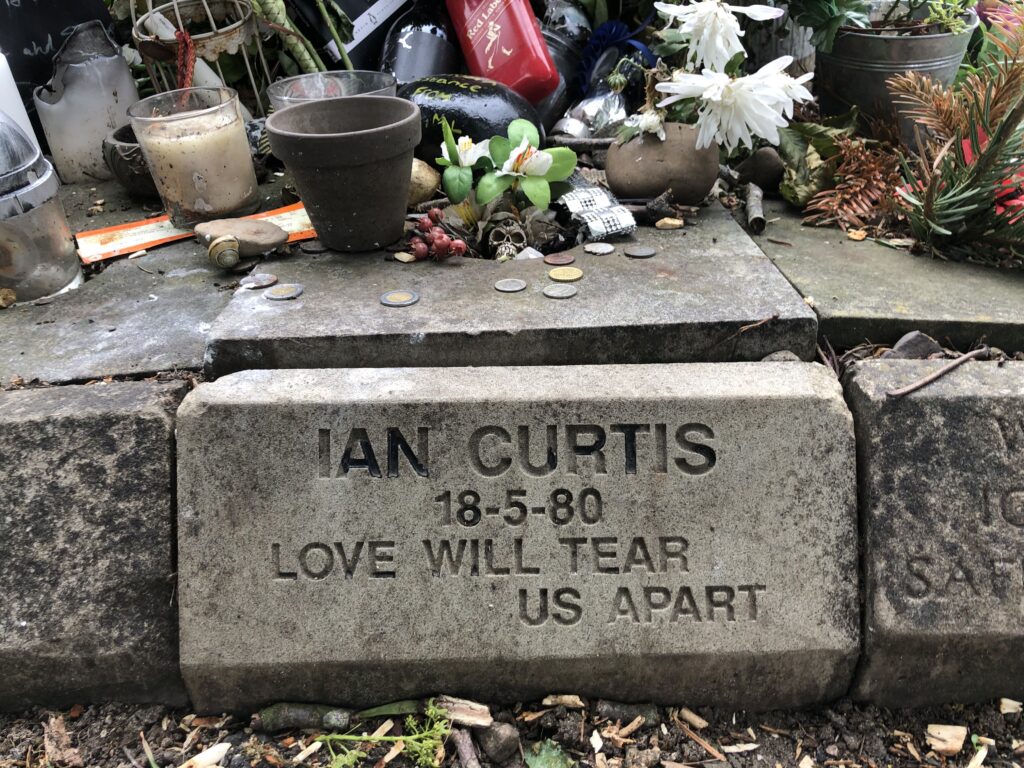
Greenpark79
Addiction, illness, and suicide are what keep the mythology of artists like Ian Curtis and Kurt Cobain going. As a teenager, none of that interested me, because I did not want to replicate my idols’ ends, ending up addicted to heroin or dead.
What drew me in was the quieter tension beneath the surface, something harder to name and slower to explain. Some Joy Division songs feel finished in a way the person never is. Some of them are not finished at all, and what you are hearing is the same incompleteness you are about to watch. Either way, the person presenting them does not seem together, and it turns out they never quite were.
And when I watch performances, I can always spot it. Take the 1979 BBC performance of Joy Division doing “She’s Lost Control,” where I can see both how performance hides it and exposes it at the same time. How he holds himself, how his arms stick out rigidly, how he stares off somewhere into space, completely detached from himself – they all make the performance feel like he’s fighting something inside that the music can’t quite reach. However, the set is impeccable. Precise lines, minimal percussion, a riff made to explode into life in a live setting, and Curtis barely moves from his spot. He’s cemented, with his arms jerking upwards, staring through the camera and beyond, totally disconnected from what’s happening behind him. It looks mechanical rather than rehearsed. Then he goes back into silence again, and I can’t quite look away.
“Transmission” is the exception that makes the rest of it visible. The riff is the same kind of machine, but the lyric gives the body an order the other songs refuse it: dance, dance, dance to the radio. If he still looks sealed off while singing that, the failure is no longer the song’s. The song has already solved its part. He will not take the solution.
After witnessing that awkwardness in Curtis, you start recognising it in other people. That’s where the similar pull comes in. Cobain takes the same uneasy energy and turns it into something sharper and slightly more aggressive. His performances, at times, become confrontational, almost defiant in how they mock themselves, turning what could be raw vulnerability into a kind of armour that changes the songs from confessions into challenges. You watch him pushed out on stage in a wheelchair at Reading, dressed in a hospital gown after the British press said he was too ill to perform, a wig flopped over his eyes like a corpse, mocking the image of himself as dead, turning his own story into a performance that feels both defiant and humiliating, blurring the line between what happened to him and what the audience expects to see. The joke here is also how he plays with them and the press. They had come for the body. He gave them the costume of the body, then stood up and took it back. He knew exactly what people expected and uses the stunt to hide his real vulnerability behind a performance of it. He’s showing he’s always the one in control, not just of the act but of how you feel about it.
I think about the distinction between musicians who realise they’re performing a role, and those whose resistance has worn away entirely. It’s the difference between pretence becoming genuine and mythology taking precedence. In Utero captures that moment of surrender, the final stretch where Cobain crosses the line. By the end, there’s no innocence left in his performance. Earlier, you can still feel the tension between his true self and the role he’s expected to play; that tension matters before the “stunt” completely takes over. It’s important because the myth hinges on seeing them as the same kind of case. The opposite, a performance starting genuine but becoming artificial, isn’t rare, though the shift takes time to unfold.
So it goes with Morrissey too. On “There Is a Light That Never Goes Out”, the misery is already theatrical, but the song is finished without him: a melody that resolves, a death wish stated so cleanly it no longer needs the life to prove it.
The misery has a costume department. Honesty becomes a tool for flattery, aimed at a room that already knows the pose. The conversion he was after is the same move Cobain was making by the end: the unease performed as the point, rather than suffered on the way to the song.
They were talented, of course, and their influences show. But none of that matters once everything gets stripped down to the persona alone. At that point, the persona comes before the work; the performance is built first, and the music follows. It’s the reverse of how things began, when the work shaped the image instead of the other way around. Once that flip happens, there’s nothing left to uncover. The fusion of self and performance has already taken place, long before anyone hears a note. It isn’t a starting point; it’s the end game.
If anything survives outside the mythology, it is this tension between the unfinished self and the song, and it is smaller than it first looks. Neither illness nor addiction is required. An early death freezes it before you can watch it become the second, which is a historical accident as much as a truth about the work, and the myth has an easy time with accidents. That is also where this risks turning into a cliché: the sensitive rock star whose vulnerability is packaged as integrity and sold back to the audience, leaving the work feeling hollow and predictable. The real difference is smaller than that. “I’ve lost control again” circles the fit and never arrives at it. “Dance, dance, dance” tells him what to do, and he does not do it. “I miss the comfort in being sad” has already made a home in the thing the earlier songs were trying to get out of. Heroin is not the cause; it is not even the proof. It is the detail the story reaches for once the freeze has done the work.
The men stop, but the songs do not: they keep trying to solve the person who could not solve himself.
RACHEL BROWN
IMAGE: Greenpark79