“I LOOKED FOR DEPTH IN A DICK. THATS MY BAD.” SOFIA ISELLA
Self-described on her website as a “slut for words,” the line “I looked for depth in a dick. Thats my bad.” is the line from Sofia Isella’s song “The Chicken Is Naked and Afraid.” and it’s a fucking bloodbath. Isella doesn’t dress it up or play the wounded victim, she grabs the most embarrassing, universal female delusion by the throat and slams it on the table, the desperate, pathetic hunt for real emotional depth inside some basic, shallow prick who was never going to deliver anything but a quick nut. “That’s my bad” is the savage twist, no whining, no “he hurt me” narrative, just ice-cold ownership of her own stupidity for thinking a dick could ever contain layers. We’ve all been there, convincing ourselves that if we just looked harder, this immature, empty vessel might magically reveal substance. Spoiler, it didn’t. It was just self-serving meat and ego. She calls the bluff, laughs in its face, and walks away holding the stick like the idiot hunt is finally over. Brutal, relatable, and merciless. No trauma porn, no pity party just pure, unfiltered takedown of every time we mistook a shallow fuck or liason for something profound.
Sofia Isella, is the LA, Chilean-American singer/songwriter who is a multi-instrumentalist and producer. Yeah, she’s a few strings to her bow.
The last piece I wrote on this was the “Trauma Sweatshop” and how being in the music industry, unhealed and vulnerable, isn’t getting healed; it’s like getting harvested. As I wrote in the Trauma Sweatshop piece, the industry has quietly built an economy around unprocessed pain, and the fact that raw wounds pull the biggest engagement numbers is still something almost no one is willing to call out. A 2023 Scientific Reports study found that people are more likely to engage with trauma‑related media when it feels personally relevant, and that this engagement is driven by heightened vigilance and emotional intensity.
It’s like your unprocessed pain feeds this machine, and if you stay cracked open enough, you can stay very profitable. So, what we saw at first was a huge surge in destigmatising mental health, and it’s like it’s quietly morphed into a business model where your unhealed crap can pay the bills, that’s if you’re lucky. It feels like sometimes the artists and bands are pushed to stay raw and relatable and almost half broken so the algorithm can keep chewing on the same depressing and gore loop after loop, and the deeper it gets dragged out and slaughtered for endless surface confessions that don’t actually lead anywhere or actually help anyone, so the question is, when someone tries to crack the shell instead of just posing dramatically in the wreckage, does that change anything, or is it just still another product rolling down the conveyor belt? I’ve got to say that Sofia Isella feels different to me, but I could be wrong, so I’ll keep an open mind.
What I like about Sofia is that it’s not like she just hands you the wound on a plate, she smashes it open, pokes around at the space inside of it and walks away holding the stick like a trophy. Her stuff has always sat in that weird, messy zone where girlhood, desire, performance, and grotesque themes, and that’s why a lot of those are drawn to it, especially people who value authenticity. She’s not chasing the shiny mainstream pop princess lane, even though she’s scored big opening slots like with Taylor Swift. Her music and visuals lean hard into discomfort, dirt, ugliness, and this unfiltered takedown of hyper-sexualisation. It comes off like a deliberate slap at all the overproduced, glossy pop out there. Her new third EP, Something is a Shell. which drops on April 17 takes that stare and makes it sharper. It’s a real confrontation with all the surfaces that have zero substance underneath. Shallow guys, cultural expectations, the industry’s endless demand for pain you can package and sell.
The track that kicked this article off for me is “The Chicken Is Naked and Afraid.” The lyrics don’t pull any punches…
I’ll break the bullet, and I’ll bite the end
This is disappointing news for both of us, my friend
There’s nothing to you! And that’s very sad!
I looked for depth in a dick. That’s my bad.
You threw yourself under the bus. The bush is beaten
’Cause I took the stick and it’s Get-The-Job-Done Season.
This isn’t brokenness performed for likes (though the likes are definitely rolling in). It’s a cold post-mortem, she owns the dumb search for meaning in empty places, then flips it. She names the shallowness without wallowing in victim mode. Takes accountability, “that’s my bad,” and grabs some agency back. Less “look at my trauma porn” and more “I cracked it open, and there was nothing worth saving.” If the sweatshop runs on fresh wounds forever, what happens when an artist decides the wound isn’t the main event and starts calling out the emptiness instead?
Those egg visuals she’s been posting on TikTok and Instagram? The hands cracking shells, yolks flying, that featherless naked chicken looking ridiculous and vulnerable. It’s surreal, grotesque, on the nose. It plays with fragility, being exposed, the whole chicken-or-egg thing, and the EP title itself. Something is a shell. forces you to ask what’s really in there? Real stuff, or just more hollow performance?
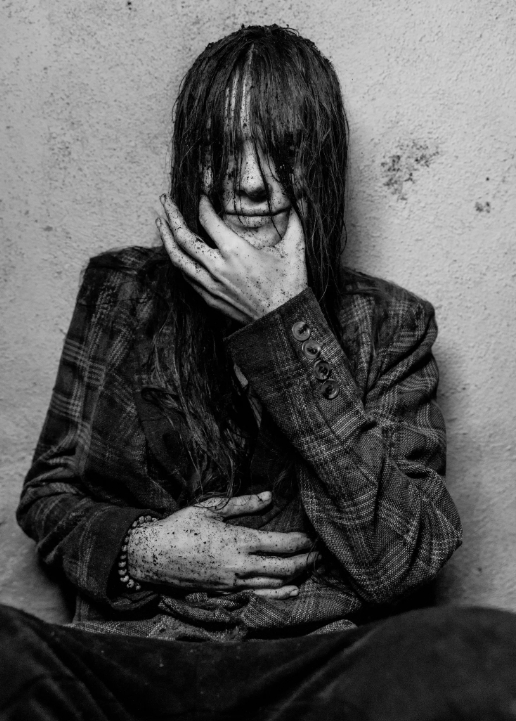
That thread runs through everything on the project. Including how she pushes back against regular femininity. Isella hardly ever shows up in perfect makeup or sexy outfits. She smears on makeup that looks like dirt, lets her long dark hair just hang there messy, twists her body into weird, grotesque shapes, and wears baggy clothes that hide instead of flaunting. She’s talked about actually enjoying looking ugly, feeling good when she looks uncomfortable, wanting space to be disgusting instead of keeping her face “still and nice and perfect and pretty.” None of it’s random. It’s a direct counter to the hyper-sexualised act she ripped apart in “Above the Neck”, how society fetishises both innocent youth and overt sex while demanding women stay consumable surfaces.
The algorithm loves perfect glazed bodies packaged for clicks. She picks dirt and unease on purpose. But when someone who could easily win the pretty game chooses the gore… is she actually fighting the machine? Or just serving it a weirder version of the same vulnerability, scroll bait?
It goes even deeper on the EP. “Numbers 31:17-18” looks religious texts right in the eye when they’ve been used to dehumanise people. The songs keep digging at control versus real autonomy, intimacy versus straight extraction. She mentioned writing the EP in two modes, laughing out loud by herself in a dark bedroom or crying with a guitar in the back of a tour van. It feels lived. Not factory-made for the sweatshop. She pulls from Plath, Atwood, and Nine Inch Nails not for cool points, but because they give her this sharp literary edge that turns frustration into something way more cutting than plain confession. If vulnerability is the product now, what changes when someone treats it like raw material to cut open and examine instead of just displaying it on repeat?
Look, we don’t pick our starting line. Isella came in with advantages, artistic family, Oscar-winning cinematographer dad (Life of Pi, Top Gun: Maverick), writer mum, homeschooled with resources, early violin encouragement, and family hands-on with visuals and projects. The internet loves slapping the “nepo baby” tag on her, and yeah, those connections clearly cracked some doors wider for production quality, touring slots, and big support gigs like Taylor Swift.
For me, it’s never been about where you start, it’s what you do with it. Does the head start turn you into someone who gatekeeps, looks down, or keeps feeding the same extraction cycles that chew everyone else up? So far, Isella doesn’t read like that. She’s taken the advantage and used it for egg-smashing absurdity, smeared-makeup grotesquerie, and lyrics that roast shallow dick and hollow performance instead of packaging her pain for easy likes.
In a system that rewards staying broken and consumable, refusing to perform the emptiness is its own small rebellion. “I looked for depth in a dick. That’s my bad.” isn’t just a savage one-liner, it’s the sound of someone grabbing the stick, calling the bullshit, naming the nothing inside, and walking away with whatever agency she can snatch.
As Something is a Shell. drops this week, that feels like the real flex. She could’ve gone the polished trauma-porn route and printed money. She didn’t. The chicken is naked and afraid, the shell is cracked open, and for once, there’s no desperate pose, just the cold, messy truth staring back.
Whether the machine even notices or just rebrands the next shell doesn’t matter as much as the daily choice, keep dissecting the void, or keep posing in the wreckage. content, no matter her background. And yes, the algorithm devours it. Streams reward the raw feel, the cycle spins, and Isella isn’t magically outside it. People still chase numbers, touring blurs art into content, and even strong work can get repackaged as “dark pop relatable” by the same platforms.
Still, “The Chicken Is Naked and Afraid” gives a better blueprint anyway. Name the shallow shit, crack the shell and look inside. Walk away with whatever agency you can snatch. It’s messier than the polished wound cycle. Feels more alive, probably less endlessly profitable in the trauma-porn sense, but way more substantial.
As the EP lands this week, the questions hang there, what if more artists, no matter their start, stopped feeding the sweatshop and started dissecting vulnerability instead of parading it? Does picking dirt over gloss, or grabbing agency over staying broken, actually move the incentives? Or does the machine just rebrand the shell in a new wrapper? When privilege opens doors, do you use it to pry them wider for others, or just stage fancier personal drama? And if someone handed every advantage and still refuses to plate up the same unhealed wound… what does that tell us about how much of this sweatshop is baked-in structure versus the choice we make every day to keep cracking instead of posing?
In a whole system built on staying broken, refusing to perform the emptiness is a tiny rebellion. The bigger question is whether the machine even registers it or just lets the belt keep running while the shells stack higher and higher.