SPECTACLE IN EXCHANGE FOR SOUL, THE DEATH OF THE RAW MOMENT

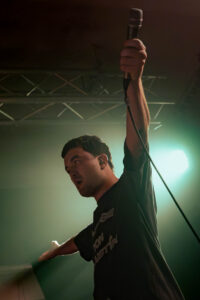
McFly (Kim Sabatelli/Northern Exposure)
Is it just me or has something slowly been shifting in the live‑music world for a while now, creeping up at first, then it seems like suddenly all at once. People have always complained about commercialisation in music, yep, I have a lot recently, but the scale and speed of what’s happening right now feels much different. It’s not just the ticket prices or the arena boom that I wrote about earlier, it’s the way the entire visual language of live music has changed, and you can see it most clearly in the footage and announcements. Venues promote shows with hyper‑stylised teaser reels. Tour diaries look like lifestyle campaigns. The visual grammar of advertising has become the default setting, blurring the line between culture and commerce until they’re almost indistinguishable. This reinforces the idea that the aesthetic takeover is systemic, not isolated.
Festivals are fast becoming just content farms with wristbands. Where’s the letting your hair down and looking like you just fell out of a bin for five days gone? “It’s always been like it!” I hear you say, well, maybe slightly, but nowhere near at the level it is at now. There is a new trend creeping into live music spaces that is all a bit too Hunger Games ‘Capital’-esque for me. This is not just limited to arenas anymore. The phenomenon can be seen everywhere. Gig and album announcements, footage from summer festivals reveals a too smooth, too polished, too colour-graded, and too perfectly framed look. Festival chaos, with its sweat, dust, and shaking camera phones, has given way to footage that looks more like a trailer for Superman.
It wasn’t too long ago that festival clips were shaky, overexposed, half‑blocked by someone’s head, and full of accidental magic, a stranger screaming the lyrics next to you, a guitar cutting out, a sudden downpour turning the field into mud. Those imperfections were part of the memory. They were the memory. And your eyes aren’t deceiving you, because today’s festival footage looks nothing like it used to. The reason for this is simple, all that polish has a reason, the purpose of festival footage has changed. Festivals are no longer documenting the experience, they’re creating content for social media to sell more tickets, to consume more branding, buy more, speaks more. They have to create not only an experience but also content to promote it and the footage is supposed to do it perfectly. Therefore, it should include spectacular drone shots, slow motion of a crowd, colour schemes in line with the brand and high-end cameras filming all that, like in a perfume advertisement. All the rawness and imperfections have been cut out of the footage, the same goes for the aesthetics of festival clips. This approach fuels the growing arena phenomenon, where size matters.
Festival footage isn’t about preserving a moment anymore, those days are gone and it’s about selling one. What used to be a record of the experience has turned into a marketing tool designed to promote the festival, the brand partners, and the artists’ own campaigns. Sponsors want gloss, not grit, for brand safety. The modern festival industry depends greatly on brand partnerships. From energy drinks to phone companies, from fashion brands to banks, they all want the footage to be clean, glossy and safe. Festivals used to portray the messiness of crowds, but this is no longer their task when it comes to sponsors. There is no messiness in their brand story, so it gets cut off. A new visual language emerges, corporate, not community-driven and definitely not real life.
And then there are the headliners. They show up with photographers, lighting designers, content teams, and a whole list of aesthetic demands. The festival becomes a set, not a setting. Everything has to match the tour visuals and the social‑media plan. That’s why the footage everywhere suddenly looks identical: the slow zoom‑ins, the dramatic pans, the teal‑and‑orange colour grading. It’s like every festival has been dipped in the same Instagram filter.
Whether it is Glastonbury, Primavera, Coachella or Reading, the footage looks absolutely the same, glossy, stabilised and ready to be posted on algorithms. It’s so boring. The festival becomes a mere backdrop for the artist’s brand, eclipsing its own identity, unless its programming or location is distinct enough to resist that. Everything has to be bright, clear and recognisable. Festivals and bands now churn out the same boring footage designed for easy online sharing, from confetti blasts, firework explosions, choreographed crowd waves, and dance floor drops, all meticulously planned and devoid of any real creativity or spontaneity. This footage is optimised for sharing, not memory.
And this is the part that stings, the more perfect it’s all becoming, the less human the experience feels because it’s not what it is actually like. Festivals aren’t like that, gigs aren’t like that and bands that actually stood out go onto the same production line. It’s saddening. The camera no longer captures the moment, it dictates it. You can feel when a crowd is reacting to a song, and you can feel when a crowd is reacting to a camera, you can’t fake that. None of that footage which is put out to the public is accidental. It all connects directly to the economics of the live music industry. When touring became the industry’s economic engine, the visual paradigm shifted. As albums began to be promoted rather than generating revenue, the visual ecosystem had to adapt.
As footage becomes more and more glossy, the experience of the event itself becomes detached, even when you’re right in the middle of it. You’re no longer a participant in the unique moment, you’re part of the production. And maybe this is the actual change, the festivals used to be places. Now they are products. Maybe this is the trade‑off of the current era, spectacle in exchange for soul. Everything is shot with the same aspirational sheen. The aesthetic has become so universal that it no longer signals quality, it signals conformity. The industry doesn’t just look like advertising now, it thinks like advertising. Some people won’t mind, they’ll enjoy the fireworks, the scale, the cinematic sweep. Others will feel the loss of the grit, the closeness, the sense that something real was happening in front of them rather than being manufactured around them.
Gloss has eaten the whole scene alive. The only question left is whether anyone still cares enough to spit it back out. If we keep accepting this glossy, hollow version of music culture, we’ll get exactly what we deserve, beautiful images of something that no longer exists.
It wasn’t too long ago that festival clips were shaky, overexposed, half‑blocked by someone’s head, and full of accidental magic, a stranger screaming the lyrics next to you, a guitar cutting out, a sudden downpour turning the field into mud. Those imperfections were part of the memory. They were the memory. And your eyes aren’t deceiving you, because today’s festival footage looks nothing like it used to. The reason for this is simple, all that polish has a reason, the purpose of festival footage has changed. Festivals are no longer documenting the experience, they’re creating content for social media to sell more tickets, to consume more branding, buy more, speaks more. They have to create not only an experience but also content to promote it and the footage is supposed to do it perfectly. Therefore, it should include spectacular drone shots, slow motion of a crowd, colour schemes in line with the brand and high-end cameras filming all that, like in a perfume advertisement. All the rawness and imperfections have been cut out of the footage, the same goes for the aesthetics of festival clips. This approach fuels the growing arena phenomenon, where size matters.