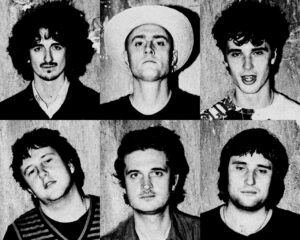
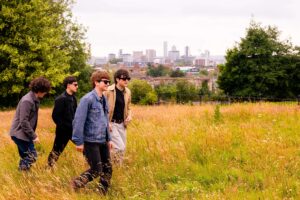
FONTAINES D.C SAINTS OF SINCERITY, POETS OF THE PAVEMENT

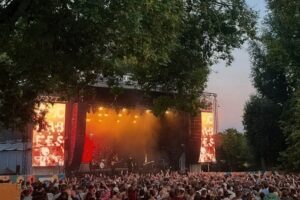
Currently storming through Europe as they gear up for a colossal UK homecoming at Manchester’s Wythenshawe Park on August 15th, 2025. Their fourth album, Romance, released in August 2024, may be nearly a year old. However, it’s still pulsing with urgency, trading Dogrel’s grit for something more cinematic, foreboding, and somehow even more intimate. Fresh off a blistering North American run earlier this year with Been Stellar, they’re now set to be joined by Kneecap and Mercury Prize winners English Teacher for what promises to be a thunderous UK return.
I’ve followed Fontaines D.C. from the early days, songs like Chequeless Reckless and A Hero’s Death to name a literal few, seared into my soul. I was lucky enough to catch their early Romance shows in Liverpool, intimate, electric, and already tinged with the sadness of goodbye. These boys were heading for the big time, the arenas, the main festival headliners.
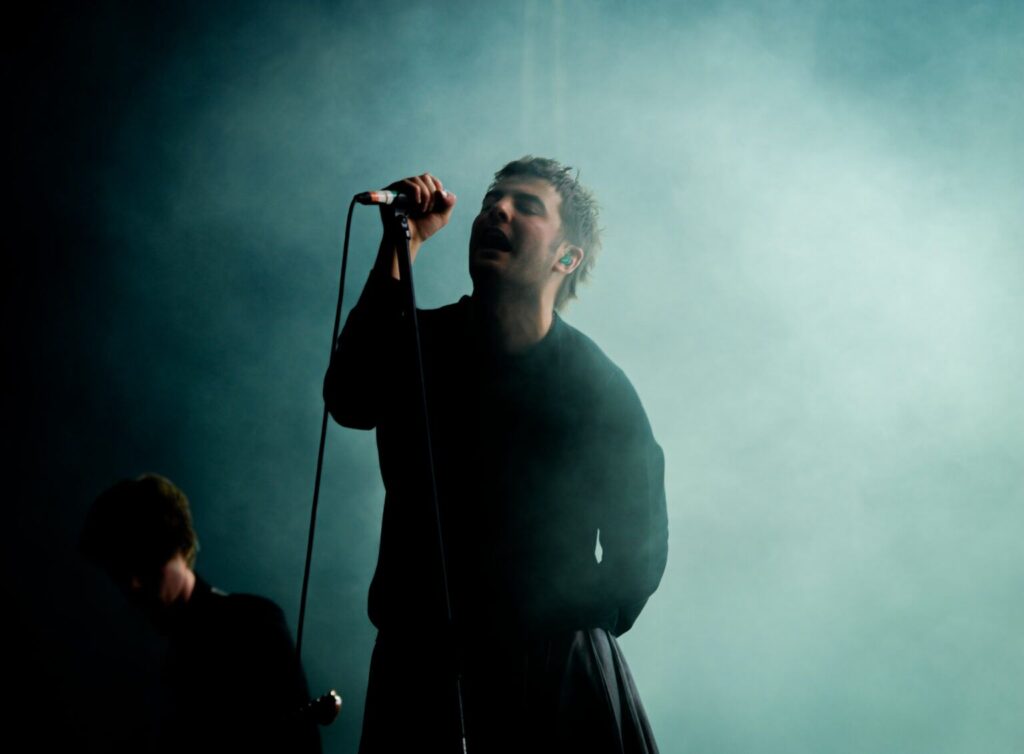
Grian Chatten is most certainly thriving under the stage lights; he’s magnetic, sharp, like he was carved for the chaos of big crowds. But like the true poet he is, I can’t help but feel he’s more at ease in the shadows, where words aren’t shouted but whispered. The big stage rarely fits the soul of a poet. One that demands performance when all they want is presence. Still, greatness doesn’t get to choose its spotlight; unfortunately, popularity drags it there, kicking or not.
Romance marked a shift, a sound more expansive, more cinematic, yet somehow, their live energy remains raw and immediate, poetry shouted into the void. But it’s not a void anymore, it’s not playing to ten people in London carrying equipment on the tube, it’s stadiums and venues packed wall to wall, every lyric vibrating off bodies that came to feel something real.
In this piece, I take a closer look at the band and explore what makes them stand apart in a crowded landscape of poetic pretenders.
When listening to Fontaines D.C., have you ever found yourself asking, “Is this poetry or just good yelling?”
Well, it’s both, and that’s exactly the point. Fontaines DC collapse at the distinction, and that’s their USP. It’s poetry that’s been choked out on a rainy street corner; it’s equal parts howl and hymn. They take their internal monologue, the dissonant, messy, imperfect stuff and fling it outward with the force of a riot. The yelling is the poetry. It’s urgency dressed up in metaphor, sincerity slammed into rhythm, the kind of verse that doesn’t wait to be understood because it already feels true.
You don’t sit and analyse “Cause I thought it was ‘love’ But some say that it has to be ‘choice’ I read it in some book. Or an old packet of smokes.” for structure, you flinch, then nod, then keep walking. It’s a lyrical Molotov cocktail, and it’s more honest than most sonnets.
Post-punk? More like post-everything.
Fontaines DC aren’t just post-punk, they’ve obliterated the hyphen. Their sound drips with literary angst, political unrest, shoegaze haze, and, of course, their existential grit. But yet none of it feels borrowed. That’s a skill that’s not bestowed upon many. It’s like they’ve taken rock’s relics, Joy Division’s chill, The Fall’s snarl, maybe a dash of My Bloody Valentine’s dreamscape and fed them all through a blender powered by Dublin disillusionment and French philosophy.
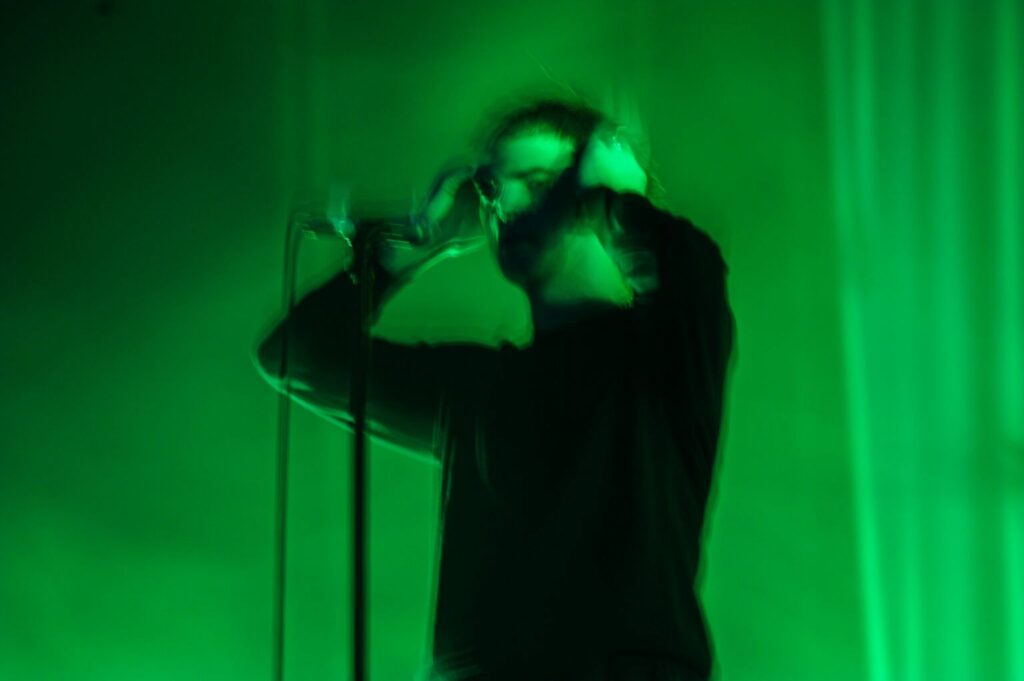
They’re post-punk in the same way a protest is post-civility. What they create is not an homage to the past; it’s a rupture. They don’t nod to their influences, they interrogate them. When “post-everything” hits, it’s not just a genre shrug, it’s an aesthetic mutiny.
Can you name another band that cries in 7/8 time?
Precisely. Well, you’ll be pushed to find a single one with Fontaines DC’s elegance and existential flair. They make uneven time signatures feel like emotional syncopation, like crying in patterns too complex to explain but too familiar not to feel. 7/8 is supposed to be angular, jagged, and mathematical. Fontaines DC? They turn it into a breakdown masked as a dance, “I wanna take the truth without a lens on it. My God-given insanity, it depends on it.” That frantic delivery from “Starburster” paired with off-kilter rhythms feels like someone unravelling in real time
Most bands use odd time for prog-flexing or rhythmic showmanship. Fontaines DC use it like a heartbeat, having an identity crisis. It’s not a technicality; it’s vulnerability structured in asymmetry. It’s like grief that doesn’t land evenly, rage that stutters, love that misfires on the fourth beat.
Find me another band that can cry like that and still make it sound like catharsis in a basement. Exactly.
Why Their Lyrics Are Smarter Than Your Therapist
Fontaines DC don’t write lyrics, they administer psychoanalysis with distortion pedals. Take…
“When you came into my life, I was lost and you took that shine to me, at what cost?”
It’s deceptively simple, like it wandered out of a breakup text and found itself centre stage at a sold-out gig. But within that line from “Death Kink” sits a decade of relational unravelling, the therapy sessions where “communication issues” mask existential dread, and the therapist’s clipboard gets heavier with every sigh. It skips the language of healing and goes straight for the scar. Unlike therapy, it doesn’t ask you to explain it, just names the ache and dares you to feel it publicly. The theoretical graph of tracks like this from Romance starts at “mild tearfulness” and ascends past “questioning all your past relationships,” until it peaks at “googling, how to process ache through Irish guitar music” It’s not just how many times you play Romance, it’s how deeply you let it rearrange you.
Then there’s “It’s amazing to be young.” A line that lands like nostalgia repackaged as propaganda. It’s not a celebration, it’s a lament for the commodified chaos of youth, the way memory gets dressed up in filters and marketed back to us as personality. It’s romantic, yes, but only in the way forgetting reality can be. It scratches at the postmodern dilemma: how do you honour innocence without betraying what came after?
And finally, “Roy’s Tune” from Dogrel is a song about being young and already tired. It’s about the soft violence of being used, of watching someone you care about be reduced to a function. “I like the way they treat me, but I hate the way they use her” That line is the emotional fulcrum, the moment where personal comfort collides with moral discomfort. The narrator isn’t heroic; he’s complicit, and he knows it. The breeze in the nighttime could kill you stone dead, not because of the weather, but because of the chill of realisation, the cold truth of a system that offers no warning and no future. And then there’s the memory: red hair, eyes not yet dead, evergreen light. It’s nostalgia not for a golden age, but for a moment when you still believed in one. The repetition of “I never really read” isn’t anti-intellectual, it’s anti-performative. It’s a refusal to dress up pain in theory. Roy’s Tune doesn’t ask for analysis, it asks if you’re hanging on.
Fontaines DC don’t just soothe, they provoke. The damage isn’t accidental. It’s crafted, deliberate, and, somehow, cathartic. Their lyrics don’t ask for healing. They insist on clarity, even when it hurts.
Aesthetic Breakdown: “They Dress Like Ghosts of Irish Literature and You’re Welcome”
Fontaines DC haunt modern fashion with purpose. Their aesthetic is a love letter written in cigarette ash and stitched with the cynicism of post-colonial prose. They give the impression that Oscar Wilde, Samuel Beckett, and Sinéad O’Connor staged an underground photo shoot in an abandoned theatre, and everything they wore was thrifted, threadbare, and bleeding symbolism.
Clothing isn’t just a style choice; it’s weaponry. Worn like armour by a band too aware of global capitalism to fully participate in it, it channels Yeatsian sorrow with a streetwise sneer. Every frayed seam is a rejection of fast fashion, every jacket a poetic act of rebellion that whispers, “We have suffered, but make it chic.”
Live sets oscillate between performance and possession. One moment it’s a gig, the next it’s a séance where the ghosts of Irish history tap the snare drum. Fog machines aren’t for mood, they’re portals. Each song conjures an ancestral ache, a chant echoing down from some Gaelic ether.
And yes, add kilts. Not as a costume, but as a cultural glitch worn not to reclaim identity, but to question its commodification. On Fontaines DC, a kilt isn’t tradition, it’s defiance masquerading as elegance. It says, you won’t make sense of me, and I won’t help you try.
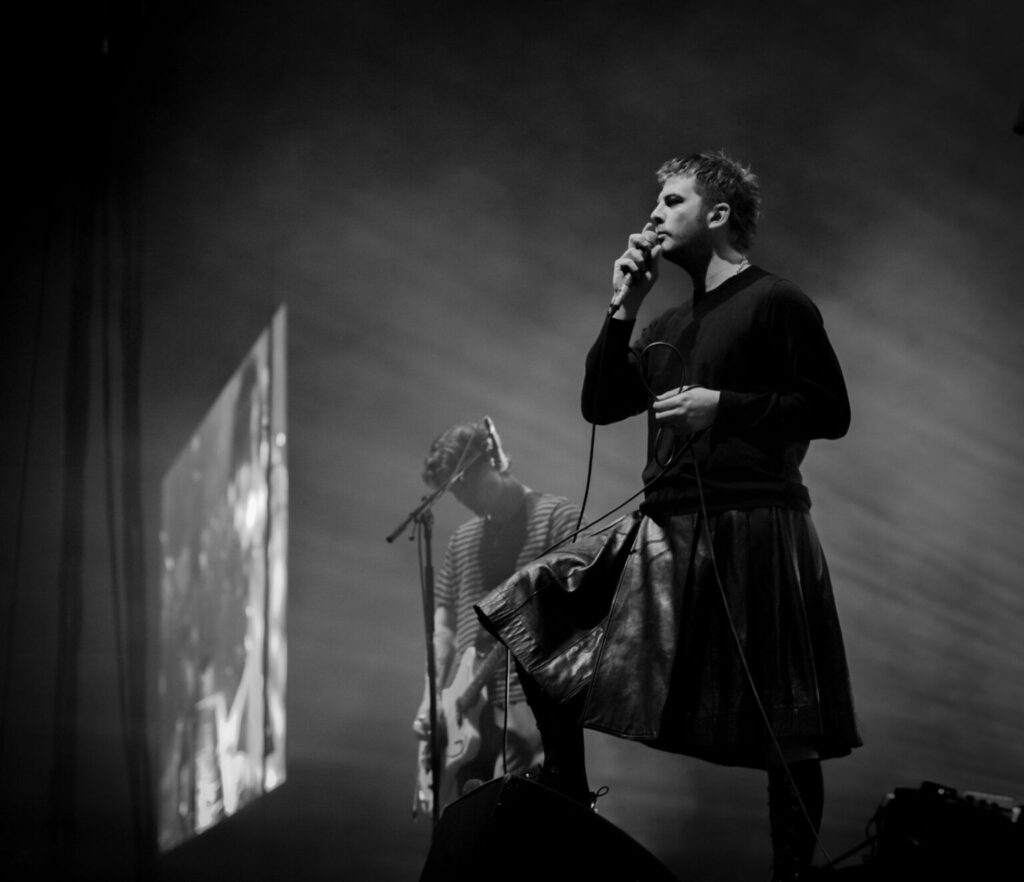
Political Credibility. Trust No State. Trust Fontaines.
Fontaines DC don’t separate the stage from the soapbox; they fuse them, loud and deliberate. When they projected “Free Palestine” mid-tour, it wasn’t a performative gesture or a trendy alignment; it was a risk. In an industry built on silence and self-preservation, that kind of unapologetic clarity is rare. It wasn’t about optics, it was about obligation. Their gigs don’t just offer sound, they issue demands.
That kind of action doesn’t come without consequences. Risking backlash from promoters, festivals, and the press? Most artists would flinch. Fontaines DC made it part of the setlist. The statement became part of the art. They treat politics the same way they treat distortion, something to be turned all the way up.
And yes, they’re possibly the only band whose pedalboard doubles as a moral compass. While most artists fine-tune their tone for airplay, Fontaines fine-tune theirs for impact. Their gear hums with resistance, every riff a refusal, every reverb a reminder that art can and should intervene.
Emotional Attachment: “Why You’d Take a Bullet for the Band”
Grian Chatten is both frontman and stand-in for feelings for all of us listeners who’ve wandered off into dead air and called it poetry. It’s not the fans’ identification with him that’s cult devotion, but identification. Grian doesn’t sell vulnerability but detonates it like a hand grenade. When he sings, he’s unleashing inner monologues we didn’t know were shared between us, and now you’re three verses in on your indeterminate intimacy issues.
Carlos O’Connell doesn’t play guitar; he tints the whole mood. Carlos’ riffs are climatic conditions of emotion: surprise showers, quiet fogs, balmy waves of memory. There’s a mortuary melancholy to his music, as if he is composing movie moments of your life you never shot but experience anyway. He isn’t just accompanying Grian; he is striding with him out of anarchy into song.
Conor Curley’s playing is surgical, exact, measured, even aggressive. He doesn’t ornament but interrogate. Every chord is a query you didn’t want to answer. It’s a stoic presence but not an icy one; it’s the repressed type. The repression leading up to the eruption, the stillness for which the scream will be resented more.
Tom Coll’s drums aren’t rhythm but song structure. Emotional scaffolding, which carries the weight that can’t be said. His drumming throbs like an overstretched heartbeat, relentless but never solid. You brace for impact rather than listening for him. It is he who can turn chaos into sense, who can turn spirals into form.
Conor Deegan III, or Deego, is the philosophical core of Fontaines D.C., using a bass instrument like a pulsebeat for the existentially poetic words of the band. A County Mayo man from Castlebar who is described to be introverted but with an eye for sharp observation politically, with a stage personality who’s earthy but rebellious.
The emotional trajectory for every member of the band is not straight; it is a recursive curve. Each time you come back, the damage regroups, but Grian’s voice and the instincts of all members still discover a new form in which to hurt.
Final Call to Action: This isn’t fandom, it’s initiation. Raise a Guinness. Feel everything.
Fontaines DC don’t offer fandom, they offer initiation. To join the cult, there’s no form to fill out or subscription to pay. The only currency is emotional volatility and ideological dissent. It’s less a fanbase, more a congregation of misfits who’ve decided that truth should sound like feedback and heartbreak should come in minor chords.
Entry requirements are unspoken but universally understood; you must feel too much about everything. A passing cloud, a half-remembered kiss, the housing crisis. You must think too hard, at gigs, in pubs, while staring at cracked plaster and conclude, often, that the system is rigged and the cure is live music shouted by poets. And you must maintain a simmering rage at the state of the world, tempered only by three chords and an Irish drawl. A heart worn so boldly on your sleeve it’s practically stitched into the lining. And somewhere, whether literal or not, a Fontaines lyric etched into your soul, like a tattoo you never got but always feel.
Fontaines are a declaration. A movement, a fully devoted invitation to join a liberation disguised as a gig.
In a world bloated with curated playlists and hollow branding, Fontaines DC are the rare anomaly that demand belief. They don’t merely appear on your playlist; they invade it. Every track is a thesis. Every lyric is a pressure point. Every live set is a reckoning.
They collapse genre, puncture pretension, and redefine vulnerability not as fragility but as fuel. They carry every buried truth you forgot to mourn. They shout like prophets because silence has never done anyone justice. They straddle the line between literary and lunatic, and the result is more honest than therapy, more political than protest, more personal than poetry.
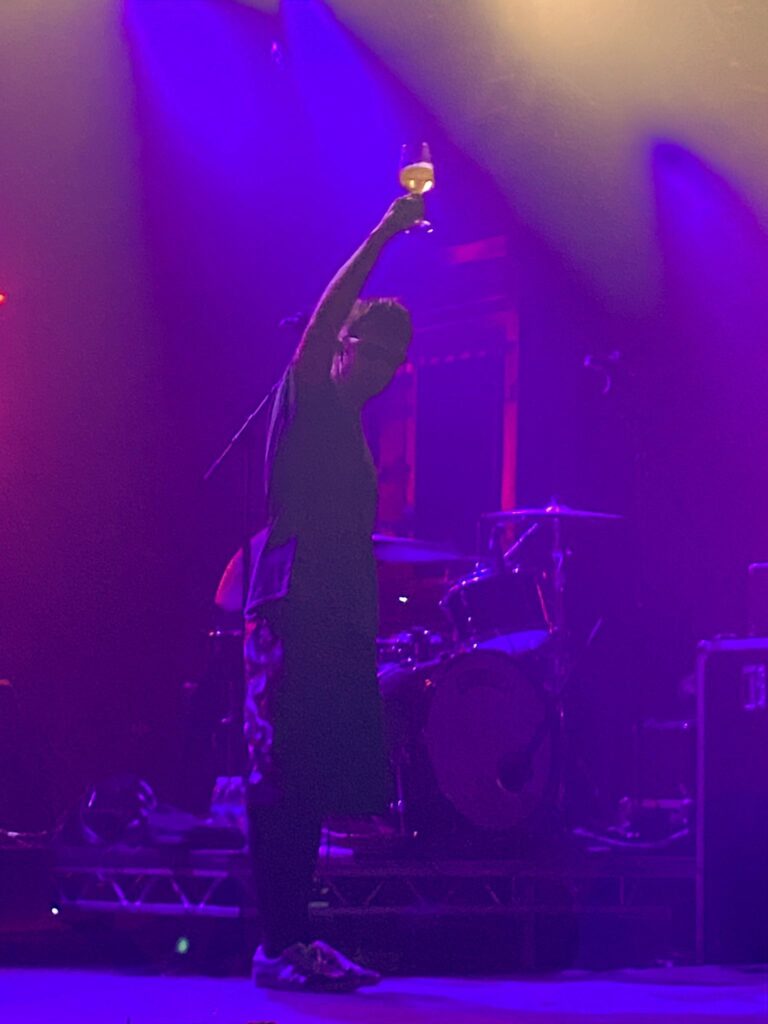
Fontaines DC aren’t just a band, they’re a symptom, a solution, and a beautifully unhinged question. It seems to me that many Irish bands feel more authentic because they channel generational trauma, grief, repression, and disillusionment into raw, poetic defiance. It is ancestral pain turned into art. Why trust anyone else?