ICONS AND ACCOUNTABILITY: WHEN LEGACY MEETS RECKONING
Artistic Merit vs Moral Accountability
The last time I brought this up someone commented “get off your high horse, we’d listen to no one if we took any notice” I was called boring and to separate the art from the artist. Well I can’t and I won’t apologise for it, ignoring harm isn’t passive it’s participatory. When we choose silence, we protect the perpetrator by dodging accountability, erase the person harmed by sidelining their experience, and signal that the damage wasn’t serious enough to address.
Harm doesn’t vanish because we’re uncomfortable acknowledging it, infact, that discomfort often fuels the illusion that staying quiet is noble or neutral. But complicity isn’t always loud it’s the quiet shrug, the “don’t get involved,” the curated oblivion. These responses preserve the systems that caused the harm in the first place, reinforcing the idea that avoiding conflict is more valuable than confronting injustice. Looking away doesn’t make us innocent it makes us part of the architecture that allows harm to continue.
We live in a culture that canonises creativity but compartmentalises character. Our idols are often flawed and not just privately. Ozzy Osbourne revered Lennon; Lennon admitted to violence; Chris Brown’s fame endured after public assault. These men occupy stages and playlists, while their moral contradictions linger backstage.
It’s easy to push to the back of your mind that while heavily intoxicated, Ozzy attempted to strangle Sharon in what he later described as the “calmest moment” of his life. Sharon recalled that he told her, “We’ve come to a decision that you’ve got to die,” before lunging at her. She managed to press a panic button, triggering a police response that likely saved her life. Ozzy woke up in jail with no memory of the attack and was charged with attempted murder. Sharon chose not to press charges, and Ozzy spent six months in a treatment facility. Ozzy later admitted to infidelity and other violent incidents, including hitting Sharon and blacking out during drug binges. Sharon has spoken openly about their “legendary” fights, saying they used to physically assault each other and that she once lost two front teeth in an argument. She has also admitted trying to take her own life after he cheated.

What Sharon and Ozzy endured wasn’t merely dysfunction, it was the relentless echo of trauma, folded into a history of devotion and shared survival. In relationships like theirs, it’s easy for endurance to be mistaken as evidence of connection, and for pain to be reframed as passion. But what often emerges from that entanglement isn’t healing, it’s a version of love woven through trauma bonding and patterns that resemble Stockholm syndrome. This isn’t to deny that love existed between them, only to say that it bore the weight of dynamics that were far from healthy.
This isn’t about vilifying Sharon for staying either. This isn’t a personal takedown of a deceased man. It’s not about vilifying one artist or erasing cultural history. It’s about situating that legacy inside a broader reality, we live in a time where domestic abuse and violence against women are an epidemic. When we glorify public figures without acknowledging the harm they caused, we reinforce the myth that talent excuses violence that brilliance makes abuse forgettable. This isn’t about dwelling in anger. It’s about refusing to romanticise what should be reckoned with. Because culture doesn’t just reflect our values it shapes them. And I want mine to honour truth, not nostalgia.
It’s about naming the bind, the psychological web where intermittent affection and deep emotional dependency keep people locked in harm. Their story may be framed as enduring love, but its foundation includes fear, infidelity, violence, and silence. There’s nothing romantic about surviving abuse. There’s nothing noble in swallowing pain for the sake of legacy. If anything, their story teaches us how fame can veil harm and how trauma bonding isn’t just personal, it’s cultural when we call it love and clap from the sidelines.
So is talent enough to overshadow this truth? And who decides what gets centre spotlight? Redemption stories in celebrity culture rarely begin with accountability they begin with a hit single, a documentary, or a tightly choreographed apology tour.
Is genius a get-out-of-consequences-free card? For many, it’s treated as such. The brilliance of Lennon’s lyrics, Brown’s choreography, Osbourne’s legacy and more these are all packaged and sold without the disclaimers.
Does “cancel culture” obscure justice or illuminate it? That depends. True cancellation is rare, with most facing temporary backlash. The deeper discomfort stems from realising we celebrate people who’ve done harm.
Why is the standard for accountability softer for stars? Because their art is positioned as irreplaceable,untouchable and in that scarcity, we grow loyal not always to the artist, but to the feeling they evoke.
Art as Mask or Mirror?
Art can also be a portal to reckoning or a veil. Art has the power to illuminateand to obscure. When it’s a portal to reckoning, it invites us to confront uncomfortable truths. It doesn’t shy away from the contradictions in its creator or its context. It allows both beauty and harm to coexist, asking the audience not just to feel, but to think, question, and reflect. In that space, art becomes a site of accountability: a mirror that doesn’t flinch.
But art can also be a veil, a polished surface behind which violence, manipulation, and abuse are tucked out of sight. When we focus only on the product and not the person behind it, art becomes a distraction from harm. A soundtrack to denial. Especially when society rushes to celebrate genius while ignoring what that genius cost others.
Some songs, films, and icons survive scrutiny. Others survive because they’re never scrutinised. The difference lies in whether we treat art as a tool for clarity or an excuse for forgetting.
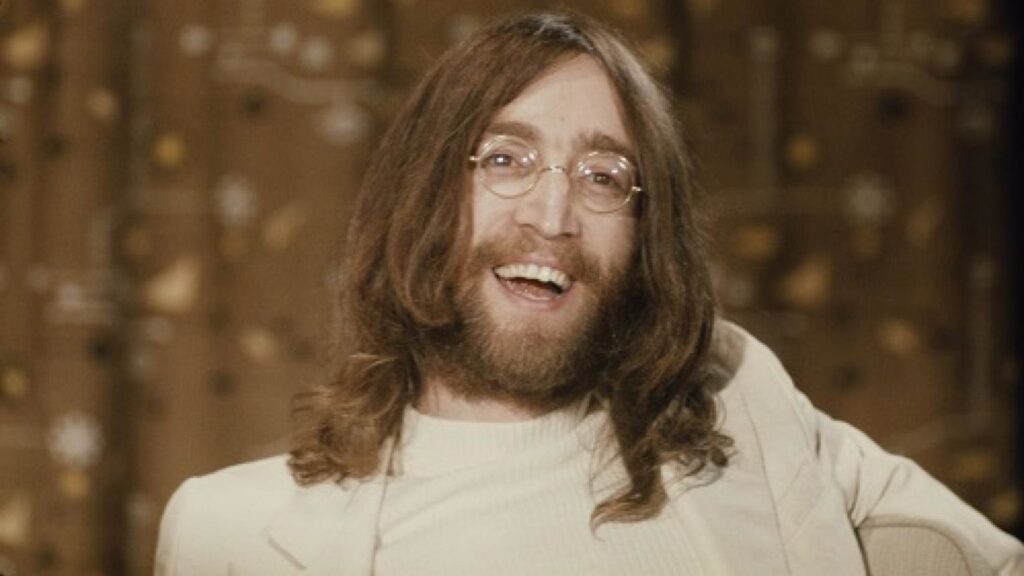
Can it reveal growth, or just rehabilitate image? John Lennon’s “Imagine” preaches unity, but how does that sit beside his admitted abuse? Was he transforming, or performing?
Is Chris Brown’s success post-Rihanna a reflection of audience values? Likely. If millions continue listening, the silence says more than a statement ever could.
Is Ozzy’s admiration for Lennon pure homage or selective morality? It’s layered. He idolised Lennon’s humanitarian impact without contending with the full human beneath it. That’s what fandom often does, slices the story at its most palatable point.
The Audience as Co-Author
Celebrity isn’t built in isolation. Every stream, every encore, every nostalgic tweet those are co-signs.
Are consumers complicit in moral erasure? If we separate “the art from the artist” without examining the systems that allow harm to flourish, then yes. Apolitical consumption is rarely apolitical.
Is there an ethical way to engage? Maybe it’s not about boycotting every flawed creator, but interrogating the mythology. Reclaiming nuance. Holding complexity without giving harm a free pass.
The Sound of Knowing Too Much
I used to love John Lennon. Not just his music but the idealism, the emotional precision, the promise that art could mean something bigger than the self. But love has to evolve with truth. I’m not innocent. I’ve listened to Lennon for years, carried those songs like anchors through my own emotional storm. But something’s switched. Not because the music changed because I did. Because knowing what he did to women, hearing him preach peace with that history humming beneath it, feels like betrayal by proxy. The art didn’t lose its power. It lost its shield.
It’s easy to speak in hypotheticals until the discomfort hits home. Until you find yourself in a position where the harm no longer feels abstract, where you relate, even quietly, even painfully. Lennon admitted to abusing women. And that admission didn’t erase the music, but it did shift the terms under which I engage with it. I can’t listen the same way anymore. Not because the art lost its brilliance, but because I stopped needing it more than I needed integrity. This isn’t about moral perfection, it’s about presence. About not looking away. Choosing not to listen isn’t personal outrage, it’s alignment. Solidarity over silence. Because good work in one arena, politics, art, advocacy, doesn’t cancel out harm in another. Political influence isn’t moral currency. You can speak out on war and racism and still be called to account for abuse. We’re capable of holding both truths. And we should.
When I researched Lennon’s legacy in more depth, I find it’s always wrapped in idealism, but the man himself was far from saintly. In a legal declaration made public years ago, his former housekeeper, Dorothy Jarlett, described him as a habitual cheater and alleged he was aggressive, even violent, toward his young son Julian during his marriage to Cynthia. And in a candid interview with Playboy, published just two days before his death, Lennon openly admitted: “I used to be cruel to my woman, and physically… any woman. I was a hitter. I couldn’t express myself, and I hit.”Yet this version of Lennon, the one who openly owned up to harming those closest to him, is rarely part of the cultural portrait we still celebrate.
I never walk away from artists because of gossip or headlines. I walk away because I’ve heard the testimonies of women, of survivors, of those whose pain is too often pushed aside to preserve the comfort of fans. Their voices matter more than aesthetic nostalgia. I believe them. Because truth doesn’t always shout it often trembles. And I choose not to drown it out with legacy playlists.
If the art carries echoes of harm, then the silence of victims becomes part of the song and I can’t keep listening. Reckoning isn’t erasure. It’s restoration. It’s knowing exactly who we glorify and who that glorification costs.
Art doesn’t absolve the artist. Influence must be interrogated, not just celebrated. Some melodies I’ve let go of. Some icons I’ve re-evaluated. Not out of bitterness but out of clarity.