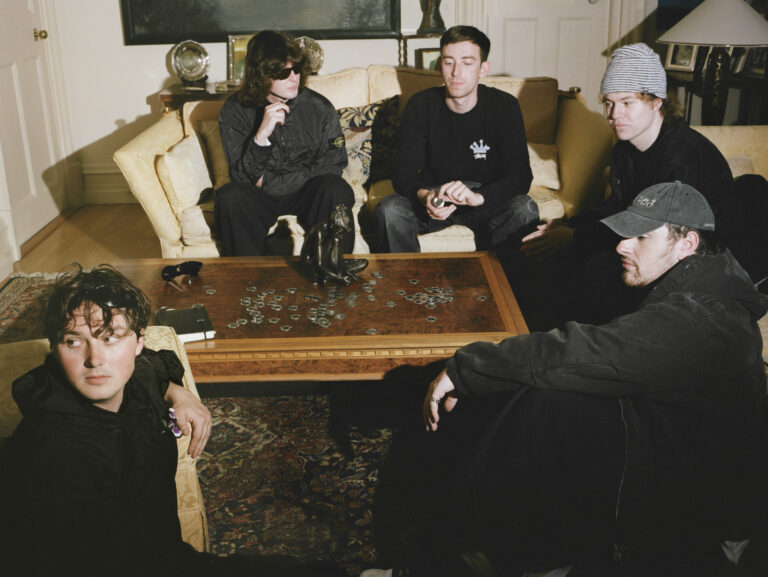
When I catch up with Frankie Francis, he’s sheltering from the weather on a pub bench and trying to untangle a technical issue that’s determined not to play ball. Before we get anywhere near discussing music, charity fundraising or the return of Frankie & The Heartstrings, there’s a conversation about snow days, childhood excitement and the fact that remote working has rather ruined the magic of waking up to a white-covered world.
It’s the sort of conversation that tells you a lot about someone before the interview has properly started; he’s down to earth, and straight away I can tell it’s going to be a great chat. Frankie’s warmth, humour and complete lack of pretence come through immediately. Those same qualities continue throughout our conversation as we move from Sunderland’s music scene to child poverty, from the future of Frankie & The Heartstrings to the changing face of Sunderland itself. Although the upcoming Sunderland Music City fundraiser provides the reason for the interview and the amazing funds it raises for Love Amelia, it quickly becomes clear that this isn’t just a conversation about a gig. It’s about a city that’s trying hard to keep the creative side of it alive, a community heavily invested in that and the role that music can play within both.
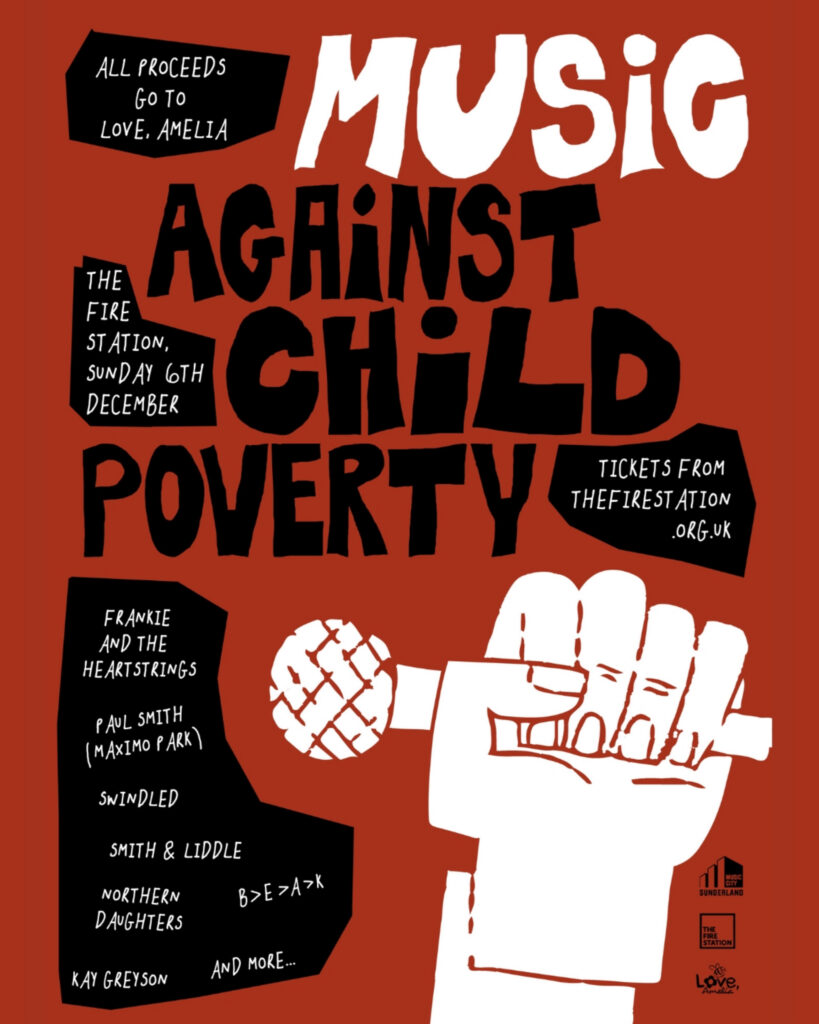
So we begin: this year’s fundraising concert at The Fire Station finds Francis wearing more hats than he would ideally like, and he’s not shy to say so. Not only is Frankie & The Heartstrings returning to the stage for their first performance in five years, but he’s also hosting the entire evening. It’s a situation he jokes about repeatedly, although there is a genuine hint of anxiety beneath the humour. I get that completely; I have put on events, and I feel for him being the organiser and headliner.
“I’ve hosted it for the last couple of years, and I get asked to host quite a lot of things,” he explains. “When I decided it was our turn to play, I should probably have tried a bit harder to find someone else to do it. I asked a few well-known presenters around the North East, but everyone was either away or unavailable, so I ended up having to do it myself.”
The problem, he says, isn’t necessarily the hosting itself. It’s trying to work out how the transition from compère to headliner is actually supposed to happen.
“When you’re hosting, you’ve got to keep everything moving. You’ve got to fill the gaps while people are changing over behind the scenes and keep the continuity going. Then we’re going to get to the point where it’s time for Frankie & The Heartstrings to come on, and I’m standing there thinking, who’s introducing us? Do I have to introduce myself? Like some kind of Benidorm act. ‘And now, coming to the stage… me.'”
It’s a funny image, but it also sums up the spirit of the event. Nobody involved seems driven by ego from how Frankie talks. The focus remains firmly on the cause itself, something Francis has been passionate about for a long time. Long before he became Sunderland Music City’s Music Officer, charity fundraising was already embedded in the band’s ethos. Christmas shows often raised money for organisations such as Shelter and Women’s Aid, and donating a proportion of performance fees to good causes wasn’t unusual. It’s so lovely to hear that, because not all performers are so generous.
“It’s always been important to us,” he says. “Even before I had this role, we’d try and put on things that raised money for charities. Music brings people together, and if you’re able to use that for something positive, then it seems like the right thing to do.”
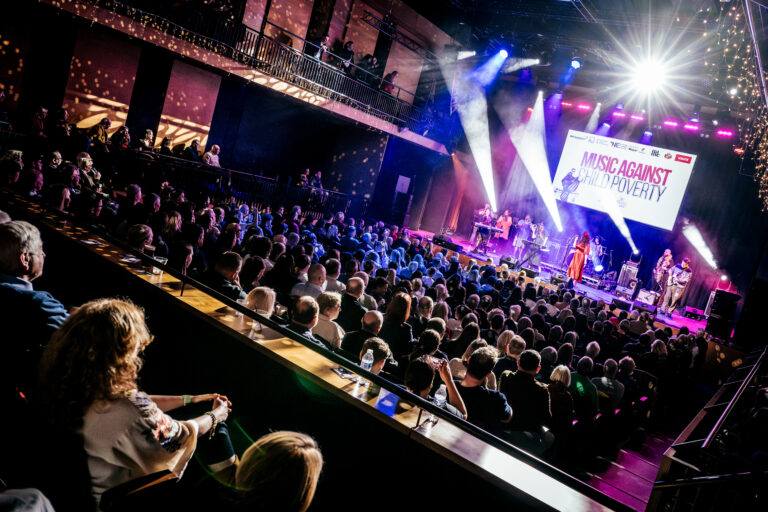
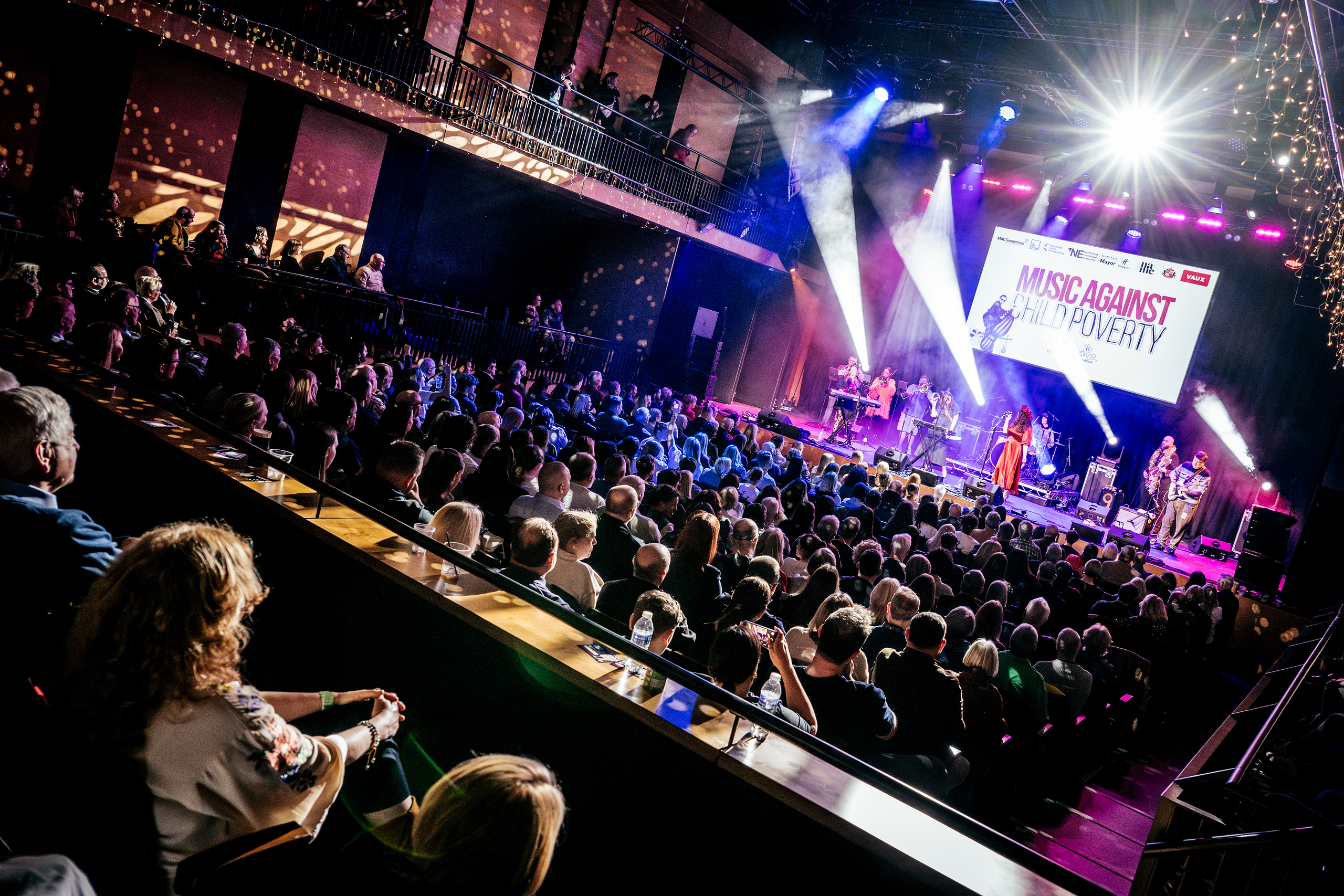
That commitment has grown significantly through Sunderland Music City’s fundraising efforts. The previous two events have each raised more than £50,000 to help tackle child poverty across the region, something Francis remains immensely proud of. And so he should. What makes those numbers particularly remarkable, he points out, is the reality facing musicians themselves.
“It’s quite a strange one, really, because musicians don’t exactly make loads of money. A lot of musicians are earning next to nothing these days. Yet despite that, they still come together to support something bigger than themselves. Music has this ability to unite people for the greater good, and I think that’s something really special.”
One of the things that keeps cropping up in our conversation, and rightly so, is the obligation of musicians to stay in touch with the communities where they were raised. The music world has its fair share of self-righteous elitists, and snobbery doesn’t become them either.
“Living in the North East, you’re always socially aware of issues like child poverty,” he says. “It doesn’t always look the way people think it does either. Poverty isn’t always about not having food on the table. Sometimes it’s about not being able to access the things that other children take for granted. It can be missing out on activities, opportunities or experiences. It can be not having things that many families wouldn’t even think twice about.”
“Over several decades, musicians from this region have always stepped up and supported charitable causes because they understand what music can do. There is a kind of duty there. It keeps you connected to where you come from, and I actually think it informs you as an artist as well. We make music because of our surroundings and our upbringing. The North East shapes us, whether that’s conscious or not.”
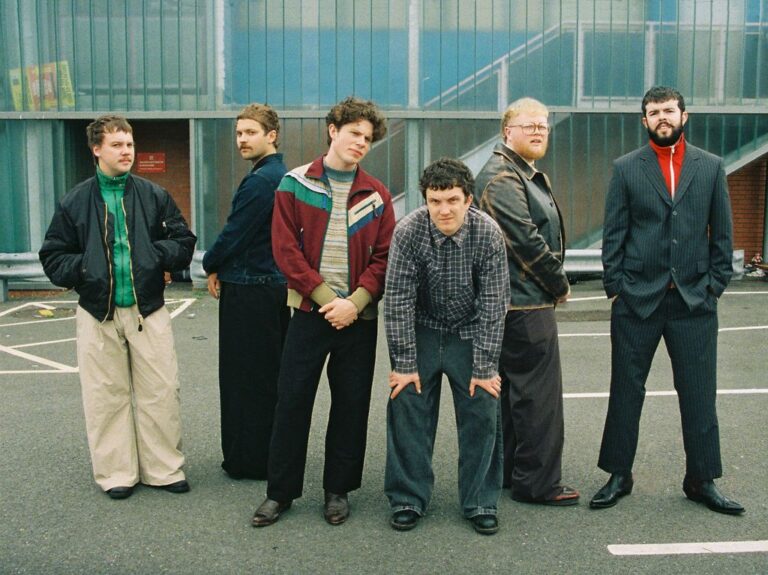
That connection between music and community is also at the heart of Frankie & The Heartstrings’ return. While many people will view the Fire Station show as a reunion gig, Francis reveals that the decision to get back together happened more organically than people might imagine.
Earlier this year, he, Michael McKnight and Ross Millard started writing together again. Initially the sessions were productive, but over time things began to drift.
“We’d started writing and getting together earlier in the year,” he says. “The sessions were going well, but eventually they started losing momentum a little bit. We realised we needed a purpose. We needed something to focus on. I suggested it to the lads and said, ‘Look, we’re looking for a headliner this year. What if we did it ourselves?’ Nobody was under any pressure to do it. I just thought it would be a good reason for us to start meeting regularly again and get some focus back.”
The significance of the comeback extends beyond simply booking a rehearsal room. Since the band’s last performances, they’ve also had to navigate the loss of drummer Dave Harper, something Francis acknowledges has inevitably affected the way they think about the future of the band.
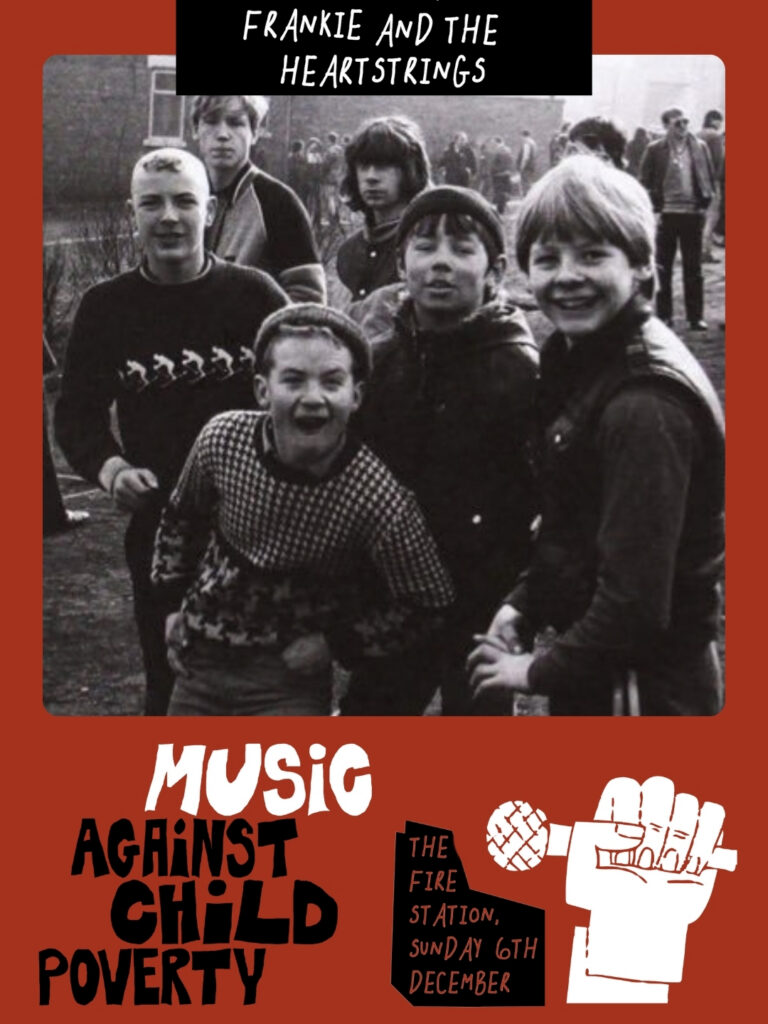
“Finding a way forward after losing Dave has obviously been something we’ve had to work through,” he says. “Finding a drummer and figuring out how we navigate that as a band has probably been one of the biggest stumbling blocks. It’s honestly just been brilliant getting back into a room with friends again,” he says. “There’s something really special about that. Catching up, playing together and having a creative outlet again.”
The show itself promises to be much more than a quick nostalgia trip. While Francis jokes that they’re probably not rehearsing as much as they should be, plans are already underway to make the performance feel like a genuine event. The band will be joined by a seven- or eight-piece brass section, and there will also be a particularly moving guest appearance.
“We’ve invited Dave Harper’s son, Sonny, to come and play a couple of songs with us,” he says. “I think he’s about thirteen or fourteen now. We’re all really looking forward to that.”
Although the fundraiser is what we are here to talk about, I am keen to find out what the future holds for Frankie & The Heartstrings. Writing sessions are continuing, and conversations about new material are already taking place. Francis reveals that discussions with management have begun and demos are slowly starting to emerge.
“We do want to make new music next year, and we’re getting closer to that point,” he says. “Management wants to hear demos, and we’re nearly there. Not quite, but nearly. We’ve got no massive aspirations,” he laughs. “That’s how the band started in the first place. We just wanted to hear a band in Sunderland that sounded a bit like Orange Juice, Dexys and The Smiths. That was genuinely it.”
More than a decade later, that spirit hasn’t really changed.
“We just want a creative outlet. We want to make music that we find interesting. If we find it interesting, hopefully other people will as well. Everything else is a bonus. Festivals, records, gigs, anything that comes after that is just a bonus.”
The same generous outlook can be seen in how Francis talks about the event’s wider line-up. Having booked the fundraiser for the last few years, he’s keen to ensure the evening reflects the breadth of talent emerging across the region rather than focusing solely on established names.
“It’s always about taking a step back and looking at who’s doing exciting things,” he says.
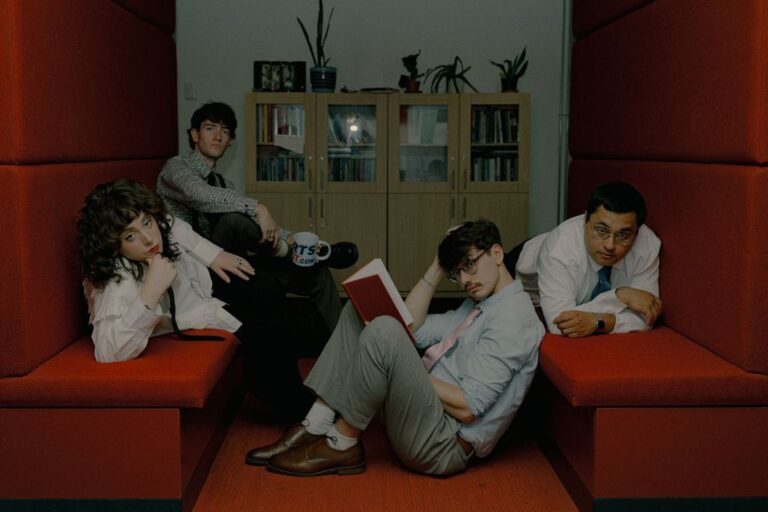
One of the acts he’s particularly enthusiastic about is Northern Daughters, a remarkably young Sunderland band rapidly gaining attention online.
“They’re basically fourteen-year-old TikTok phenomena,” he laughs. “You wouldn’t necessarily put us on the same bill, but because of my role with Sunderland Music City, I see the part they play within the city. They’re brilliant role models for younger musicians. They’re doing really well, and they’re representing Sunderland in a really positive way.”
It’s an attitude that echoes something Frankie & The Heartstrings became known for during their earlier years: creating opportunities and platforms for other artists.
“We’ve always tried to create opportunities for people, and I think now, more than ever, musicians need to support each other. If people are doing good things, they deserve a platform.”
Alongside Northern Daughters, the bill features artists including K Grayson, whom Francis praises for continuing to work tirelessly at her craft, and Swindled, whose success with BBC Introducing marks them out as another act heading firmly in the right direction.
Then there’s Paul Smith, frontman of Maxïmo Park, someone Francis clearly holds in high regard.
“Paul’s always been incredibly supportive,” he says. “A lot of people probably associate him with Newcastle because of Maxïmo Park, or with Teesside where he’s from originally, but he’s been a genuine champion of Sunderland for years. He’s just a really nice bloke, and he understands that his presence makes a difference. He’s supported this event in one way or another for the last three years, and we really can’t thank him enough.”
At the centre of the fundraiser sits Love Amelia, the Sunderland charity benefiting from the evening’s proceeds. It’s a cause Francis speaks about with obvious admiration. Rather than talking in general terms, he points to real examples of the support they provide.
“A family or single parent can literally turn up and say, ‘My child’s been sent home from school because their shoes don’t fit anymore and I can’t afford a new pair.’ Love Amelia can help them there and then. They do it without judgement. They do it respectfully, and they do it with dignity. Those things matter.”
The fundraising effort itself has received a huge boost thanks to Sunderland Music City founder Paul Callaghan, who has pledged to match every ticket sold.
“It’s an unbelievable gesture,” says Francis. “If somebody buys a ticket, that money instantly doubles. He’s literally putting his money where his mouth is.”
As the conversation draws to a close, it naturally drifts back towards Sunderland itself. It soon becomes clear that the city isn’t simply the backdrop to Francis’s work; it’s the thing connecting all of it. Whether he’s talking about music, culture, regeneration, education or opportunity, Sunderland remains at the centre of the discussion.
“I’ve got friends who come back from London at Christmas, and they barely recognise the city centre now,” he says. “So much has changed over the last few years and, honestly, it’s long overdue. We’ve spent years defining Sunderland through shipbuilding and coal mining, and those things are obviously hugely important parts of our history. But they haven’t existed for forty years. Our identity can’t just be about what we used to be. It has to be about what we’re building now.”
That ambition sits at the heart of Sunderland Music City, an initiative Francis sees as being about far more than producing successful bands.
“People often think music is just about being on stage. It isn’t. You might want to be a promoter, a photographer, a lighting designer, a journalist or a sound engineer. There’s a whole ecosystem around music and culture.”
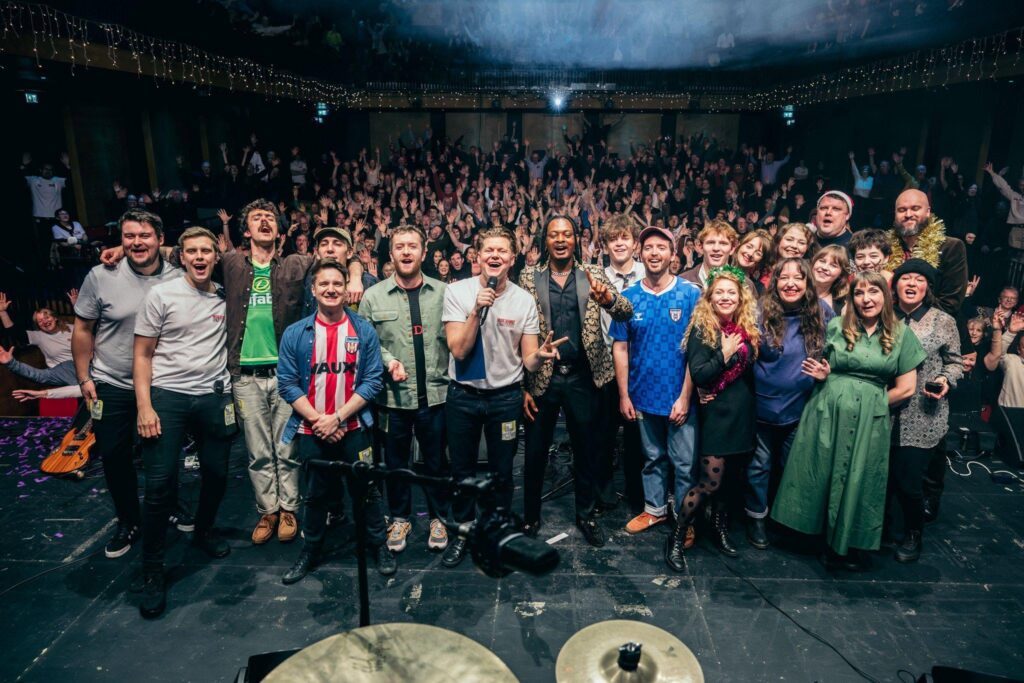
It’s an ethos of building bridges, developing the potential, ensuring the future creativity of this city does not belong solely to the privileged few; it’s all in his speech. And in hearing him talk, I can’t escape the sense that this gig is going to embody everything he’s talking about. Big names and rising talent on stage at the same time, solidarity for the same idea, a city re-defining itself culturally.
“I’d love people to travel to Sunderland for it,” he says. “Come and see what’s happening here. Come and see how much the city has changed. Enjoy a brilliant night of music in an amazing venue and know that every pound you’re spending is helping somebody who needs it.”
The return of Frankie & The Heartstrings might be what first catches people’s attention, but it never feels like the main point. This is really a story about a city, the people trying to make a difference within it and the way music can still bring them together.
Tickets go on general sale on Friday 9th October at 10am http://thefirestation.org.uk/
About the Author