TOO LITTLE TOO LATE BONO FINALLY SPEAKS UP ON PALESTINE
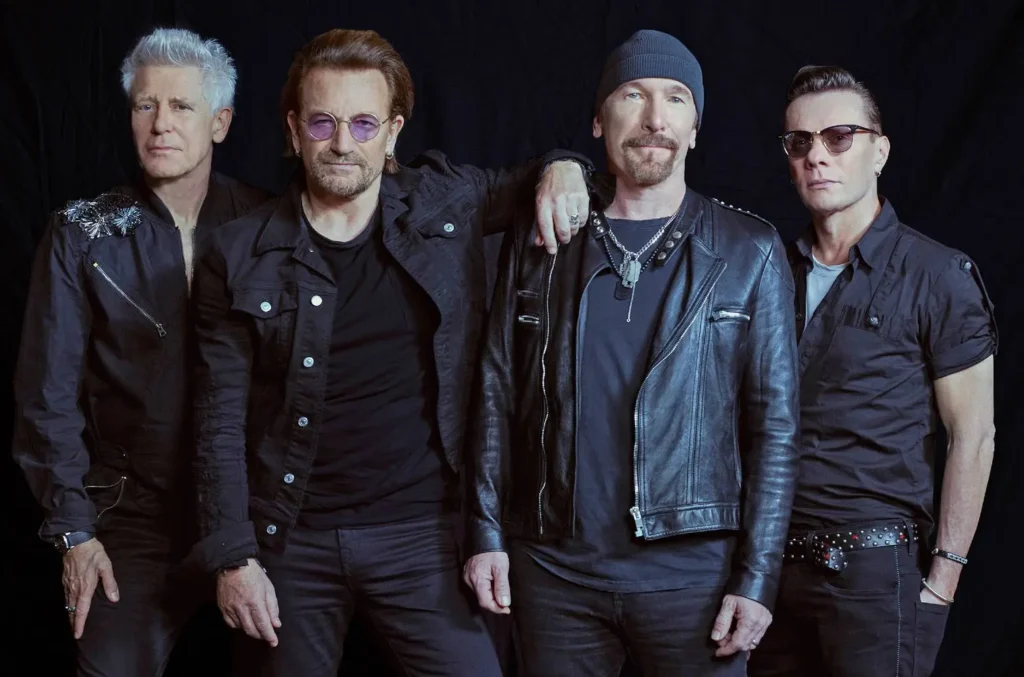
U2 has issued statements expressing their concerns over the ongoing conflict in Gaza, particularly regarding the humanitarian crisis and the actions of both Hamas and the Israeli government. In a joint statement, Bono, The Edge, Adam Clayton, and Larry Mullen Jr. expressed their horror at the situation, stating that the blocking of humanitarian aid and military actions has escalated the conflict into “uncharted territory.” They emphasised their solidarity with the Palestinian people and condemned the violence, stating that the brutality inflicted on civilians is unacceptable. U2 has pledged to donate to Medical Aid for Palestinians and has called for a cessation of hostilities on both sides.
Bono has finally spoken. After ten months of genocide, starvation, and the systematic erasure of Palestinian life, the frontman of U2 released a statement condemning the Israeli government’s actions in Gaza. And while some are calling it brave, I call it belated. Sanitised. Insufficient. This is not a reckoning. It’s a PR-safe humanitarian appeal dressed in moral discomfort. And it’s ten months too late.
Bono writes that he avoided speaking out because of “uncertainty in the face of obvious complexity.” But genocide is not complex. Starving children are not complex. Bombing hospitals, flattening refugee camps, and denying aid are not complex. What’s complex is the machinery of silence that allowed artists like Bono to stay quiet while Palestinians were erased in real time.
He says Hamas is using starvation as a weapon, “but now so too is Israel.” As if the suffering of innocent people needs to be balanced on a rhetorical scale. As if the actions of a non-state actor somehow excuse the policies of a nuclear-armed government with full Western backing. This is not nuance, it’s deflection.
Let’s be clear: Bono’s statement is more than most artists have dared. And that’s the problem. If this tepid, cautious appeal is considered radical, then the music industry is morally bankrupt. Where are the other huge voices? Yes, we have many but it’s not enough. Where are the artists who built careers on struggle, rebellion, resistance, and speaking truth to power?
When cultural figures wait until the genocide is marketable, until the backlash is softened by time, they’re not being brave, they’re being strategic.
Bono and The Edge invoked Ireland’s history of occupation to draw parallels with Palestine. Palestine is not just a symbol; it is a real place with real significance. It’s not a poetic device for Western guilt. It’s a place where people are being killed, starved, and displaced while the world debates tone.
If you want to talk about Ireland, talk about colonialism. Talk about resistance. Talk about the fact that Palestinians are not just victims, they are survivors, organisers, families, journalists, poets and more. They are not waiting for Western pity. They are demanding liberation.
Yes, we always say it’s never too late, and it is not. But this is Bono, one of the loudest mouthpieces on war and peace, a man who’s practically trademarked moral urgency. When he finally speaks up ten months into a genocide, it’s not brave, it’s belated. It’s not radical, it’s rehearsed. This is the guy who’s serenaded presidents and preached from stadiums. If anyone had the platform to scream when the bombs first fell, it was him. And instead, we got a whisper wrapped in humanitarian vagueness.
An actual real reckoning would be to name apartheid. It would call out the arms deals, the propaganda, the media complicity. It would demand accountability, not just aid. It would refuse to balance Palestinian suffering against Israeli fear. It would say “name apartheid,” calling out segregation, pointing to the scaffolding that enables genocide. Apartheid is the architecture. Genocide is the collapse, and genocide is happening right now, and we will not be silent.
Bono’s statement is not that. It’s a whisper in a world that needed a scream. It has, however, highlighted the music industry’s moral vacuum. If Bono’s cautious appeal is considered radical, it suggests that most artists are still unwilling to speak truth to power. Bono’s statement has reignited calls for other major cultural figures to break their silence and take a stand.
I’ve spent years documenting subcultures’ mid-erasure, turning grief into critique, and refusing to let pain be aestheticised for comfort. I don’t write to soothe, I write to indict. And I won’t applaud a whisper when the world needed a scream. Bono’s statement may be a start, but it’s not absolution. Not for him. Not for the industry. Not for anyone who waited until Palestinian death was palatable enough to mourn. Radical honesty doesn’t arrive ten months late. It doesn’t wait for permission. It shows up bleeding, screaming, and unapologetic. It doesn’t ask for comfort, it demands accountability.