A GLIMPSE INTO CHAOTIC TALES FROM GLASGOW HOUSE THEORY WITH DJ IL FITZ
INTERVIEW | IAN FITZPATRICK/DJ il fitz by Ella Dowell
I first met Ian Fitzpatrick at a Lo Fidelity Allstars gig in Glasgow; we fawned over 90s big beat in the King Tut’s bar as we lingered after the show. When he started telling me about him and his posse’s DJ antics from the late 90s to early 2000s, I knew I had to hear more.
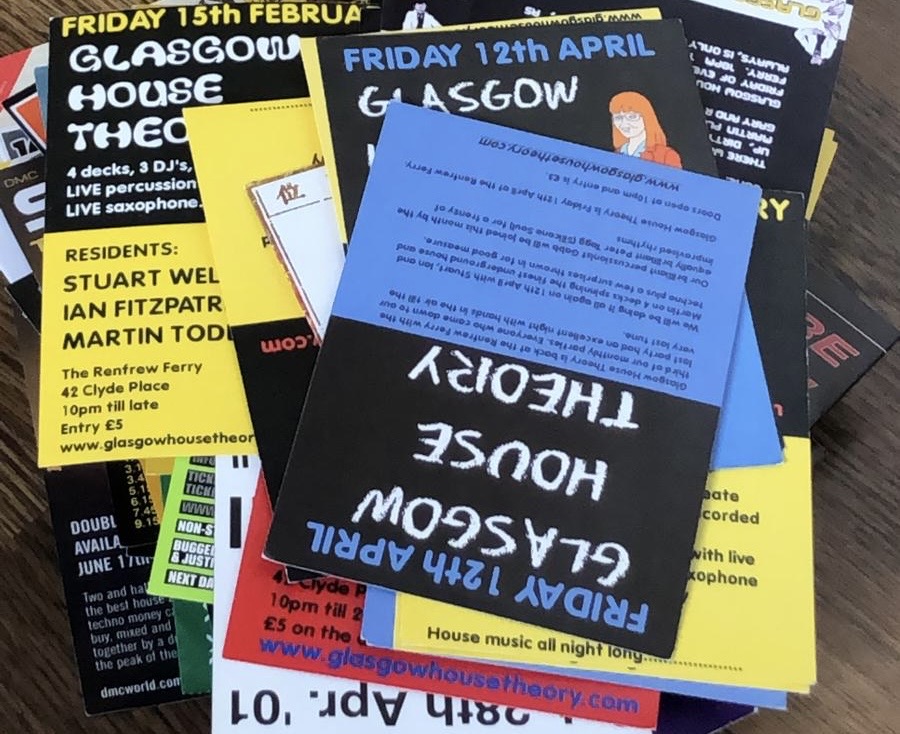
Named by Ian, the event-organising collective Glasgow House Theory saw some of the sweatiest, bounciest antics across the city and beyond. Whether it was boat parties on Loch Lomond or underground events in Tradeston, every night they hosted was simply for the love of the scene; “We were pretty much non-profit, yeah. There was a real sense of DIY, a real sense of purpose.”
Ian grew up surrounded by music. The big beat explosion plopped the Chemical Brothers at his feet before he made it his mission to explore this “fascinating” new genre. “The best night ever” to Ian was Hi Karate on Thursday nights at Glasgow School of Art, ultimately introducing him to the club scene. “At that point I was like, I need to DJ, I need to play to people. I’ve always loved finding music and sharing music- that was the big thing.” An introduction between Ian and “technically brilliant” DJ Martin Todd led to scheduling their first night in the function suite above West End Bar, Duntocher, owned by Wet Wet Wet’s Tommy Cunningham. £1 a beer, a rented sound system and a bag of records– “It was mobbed, absolutely mobbed”.
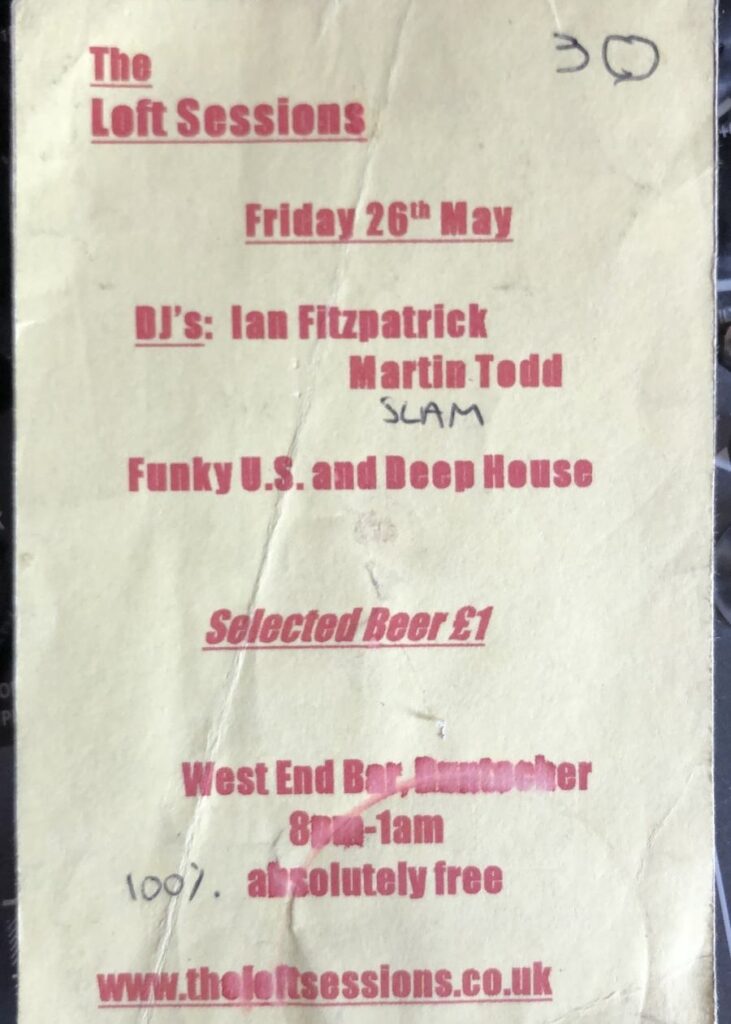
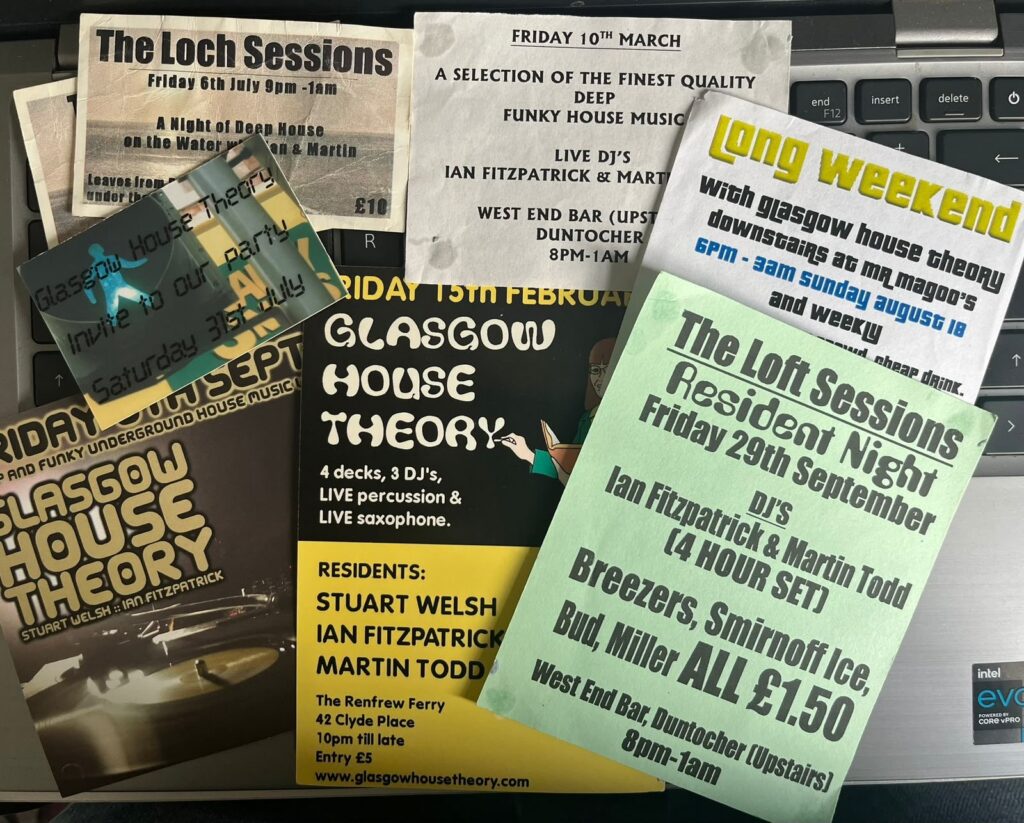
“But I’ll never forget, the whole thing could’ve fell apart, ‘cause after about two hours the amp was just smoking. You could’ve fried an egg on it,” said Ian. “We’re like, ‘What are we going to do? Do we turn it off and call it quits, or keep going and accept that we may have to replace this sound system?’ We just kept going, kept going to the end.” They managed to dodge an exploding amp and were offered a monthly slot in the pub, later named The Loft Sessions, a nod to American DJ David Mancuso. It was at that point they “really caught the bug” and decided to take their party to the bonnie banks.
The Loch Sessions on Loch Lomond had a small but mighty run; Ian described the sound system on their rented boat as “ridiculous” and the atmosphere as simply “nuts”. It was so good infact, that they ended up spending their earnings extending the boat hire, and told the scheduled buses home; “There’s a problem with the boat… you’ll need to come back later on…” It was then Ian shared with me his belief that they were cursed, later that night someone smashed into the glass of the boat, costing them the remainder of their earnings and marking the end of The Loch Sessions.
Soon after, The Loft Sessions would also come to an end: “It frazzled away when Tommy Cunningham came up to us, and was like, ‘This is great, I didn’t realise upstairs in here could be so good! I’m gonna refurb it all, and then you can play every week!’ He refurbs it…killed the place. It was horrible. It was polished. It was nice!” Shudder! “It was minging before; that was great for us!” said Ian.
Ian and Martin then began branching out to Glasgow after meeting “Mr Business” Stuart Welsh. “I came up with the name Glasgow House Theory. I could probably have come up with a better name looking back, but we were just wee guys,” laughed Ian. As they set up for the opening night of Glasgow House Theory on the Renfrew Ferry, their supposed curse struck again; a fault with the gangway of the boat meant they could no longer play. Scouring the streets of Glasgow for a last-minute venue, they were eventually welcomed into Bar Soba; “Thankfully, Bar Soba was brilliant- dark, dingy downstairs basement. That was the night we had the sax player and the percussionist and all that, sweaty madness.” It was also the night someone damaged the ceiling in the Bar Soba bathroom, costing them their earnings once again…
Around a year at the Renfrew Ferry later, Glasgow House Theory decided it was time to tackle outdoor events. I was interested to learn about the culture of secret location parties back then; “The word would go out, ‘Secret location party, bus leaves such and such pub at this time,’- you’d just turn up and disappear on a coach”, Ian explained.
The best party he attended was on the back roads to Kilmarnock, at the Black Loch reservoir, illuminated by candles across the banks on a summer’s night; “From that moment on I thought ‘we have to put on an outdoor party.’” However, once they had set up for their event, they were met with the most “biblical” summer rain; “There’s no way it could have gone ahead,” said Ian. But this unfortunate circumstance led them to instead play The Unit, a warehouse across the Clyde from the city centre, where Glasgow House Theory would later settle.
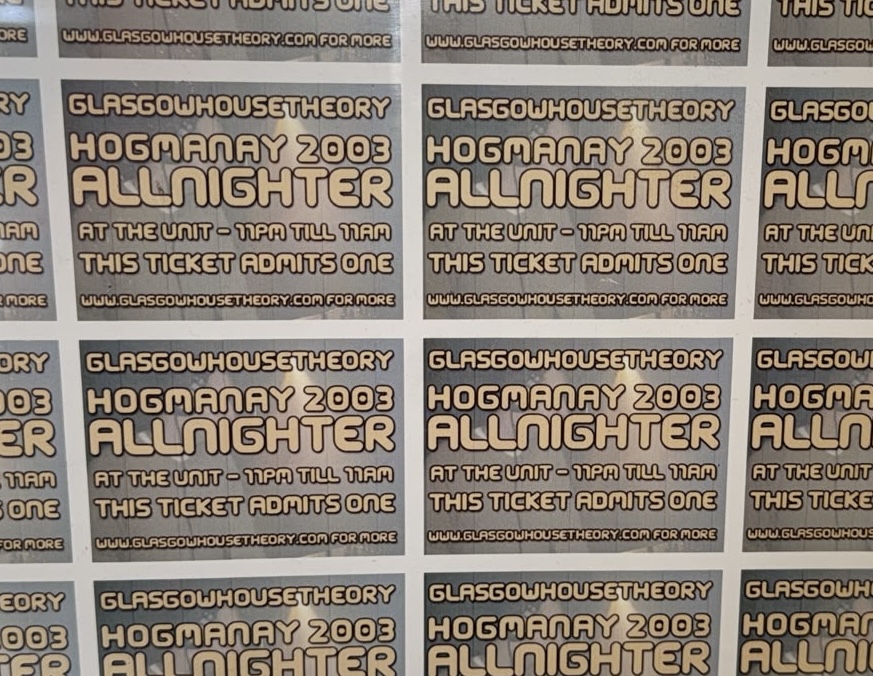
The Unit had been running as an after-hours, underground venue for years when they had started playing there; “I was convinced the police knew that The Unit was on. There was never any trouble, and there was an electric gate so there was never any dafties at it either.” Ian described their nights here as “highlights of [his] life”, hosting massive events from Halloween to their 12-hour Hogmanay bash: “It had the best sound system you had ever heard in your life- it was incredible.” However, the O2 Academy hosting more and more events was the downfall of The Unit, explained Ian; “More people were finding out about it, and more people were loitering- it just fizzled away after that.”
Glasgow House Theory then performed at multiple venues in Glasgow city centre, including The Arches, Alaska (now The Buff Club) and Archaos, a three-floor nightclub on Queen Street, now closed. Ian emphasised to me that doing events and shows for other organisers simply wasn’t as fun as the chaos they orchestrated at their own nights; the last story he told me was of a secret location party in the Campsie Fells- this time with no biblical summer rain…
“Us and 3 or 4 other groups all worked together on one of the best nights. We put on double deckers from George Square, a farmer let us use his field and we set up gazebos and generators and all that- that night went pretty mad.” They had arranged for the buses to pick everyone up afterwards at 3 in the morning, “only about 5 people got on the buses, so when the generators were running out of power people were like; ‘How the f*** are we going to get home?’ Everybody was just stranded in this field!” He reminisced about the beauty of watching the sun come up from behind the Campsies before laughing; “This huge gust of wind came and just lifted everything. Gazebo, decks, the lot! So there was even more damage from that- I’m telling you, we were definitely cursed!”
Cursed or not, Glasgow House Theory hosted what sounds like seriously electric times across the central belt during their run. I was thoroughly entertained to hear all of these stories about the underground antics of the 90s and 2000s, a time preceding social media with a strong value for experience. Ian looked back at his experiences with such enthusiasm, gratitude, and humour- I admire their commitment to putting on events, often non-profit, for the love of the scene with community soul.
I asked Ian what his favourite thing was about his time with Glasgow House Theory; he responded, “We just brought people together,;Martin met his wife through it! We loved the music; we spent a fortune on it, and we loved to share it.”
Below is a set from Ian’s SoundCloud- The Loft Sessions.