DIRECT WOMEN AND THE JUDGMENTS THEY ATTRACT
Lately I’ve been thinking about my writing and what it means to speak without clinging to any outcomes, because unconsciously I’ll admit I used to do that a lot. I’d sit there on my phone in bed re-reading my article, then I’d feel like a complete idiot the next morning. Clinging to praise, blame, or the identity of being “the one who speaks freely” has only ever brought me suffering. I’ve written opinion pieces for years, and unfortunately I’ve taken plenty of abuse for them, including a few police calls Ive had to make for harassment. People misread my direct writing as my personality, which has always struck me as lazy on their part, is that all you’ve got? Did it stop me? No, you put your views out there, and you brace yourself, and that’s the deal.
Honestly, in the past I’d catch myself checking who liked the piece, as if certain names mattered or who blocked me, and then I have to laugh at myself, because it’s so fucking stupid. I’ve asked myself, what am I even looking for? Validation from people who already decided I’m the villain before they finished the first paragraph. It’s embarrassing how long it took me to stop doing that.
It’s the same pattern women have dealt with for decades, especially musicians like Courtney Love, Kim Gordon, Kathleen Hanna, PJ Harvey, every one of them spent years being defined by people who had never met them. Not just judged on the work, but on imagined motives and invented character traits. After Kurt died, Courtney was suddenly everything and nothing, depending on who was talking, it was a pattern visible in coverage from the mid-90s onwards that routinely collapsed her music and behaviour into a single, pre-written narrative. She’d point out that people made assumptions about her without ever sitting across from her. Kim Gordon was called cold for the same energy that would’ve made a man look cool, it’s so fucking irritating. Kathleen Hanna got so tired of the media flattening her and riot grrrl into caricatures that she stopped talking to them, and do you know what? I don’t blame her. PJ Harvey refused to explain herself to people who were already projecting because that’s the crux of it. When people react, they don’t see they’re showing in plain sight the things they need to work on.
The criticism rarely ever stays on the work, it always slides straight into personal judgement, and those judgements stick harder because they were women, a dynamic still documented in studies of music journalism that show women artists receive disproportionately more coverage focused on appearance, relationships, or personality than on the music itself. The same outspokenness, the same intensity, the same refusal to soften it was read differently.
I recognise that feeling every time I publish an opinion piece, and it sucks. I used to get properly wound up by that stuff. People disagree, that’s fine, it’s got sod all to do with that, I expect disagreement. But a lot of the pushback isn’t about the argument. It’s about the assumptions attached to it, who you must be, what your motives are, how a woman is “allowed” to sound. Same old pattern, just scaled down.
Everyone is entitled to their opinion, and that will always be true. But once you share it publicly, you have to be ready for the consequences. You’ll be accused of your writing being AI, which is the new stick to beat people with when you write something they don’t like, when actually the more you write like a real person with a strong voice and actual life experience, the more some of these detectors panic and call it AI. It’s a known problem. Plenty of professional writers, journalists, and academics have posted screenshots of their completely human work scoring 80–100 % AI, but people don’t want to hear that. Disagreement will come, thoughtful, petty, or downright hostile. It’s part of the territory, I encourage people to write, but I also tell them plainly what they may walk into, and I learned that the hard way. It used to upset me a lot the nights of sleep I’ve lost over randoms on the internet, it doesn’t anymore, and at least I can laugh at that old version of myself.
When something I write touches a nerve, the reactions arrive fast. Some people engage with what I actually said, and others attack the fact I said anything at all. And then there are the ones who decide the real problem isn’t the piece; it’s me. Who does she think she is? How dare she? Ha, I’ve had that conversation more times than I can count, and it never gets less funny. They’ve never met me, never spoken to me, yet they feel entitled to fill in the blanks because the writing is direct. I’ve had people say, “You’re nothing like you write. You’re actually nice, not a bitch.” I usually laugh and say, “Well, well, well, doesn’t that tell you something about the assumptions you made?”
Nowadays I ask myself one thing… Will replying reduce suffering or increase it? Will it clarify something, or just feed more heat? Sometimes the kindest thing for me to do when I speak my mind, for them and for me, is to be silent, but that isn’t easy. Sometimes it’s a clear, honest answer without needing to be right. The skill is knowing which moment you’re in.
Praise and blame are two sides of the same coin. Temporary and they say more about the person offering them than about the writing. When I stop needing one and fearing the other, the noise loses its power.
We cling to opinions like lifelines now, partly because nuance keeps getting drowned out. Everything becomes a loyalty test or an instant verdict on your character, which again, to me, is lazy and an easy get-out clause. Because real thinking, emotional, political, cultural, comes from tension. From being able to enjoy a song while criticising the politics around it. From loving an artist and still naming their silence, from disagreement that doesn’t require dehumanisation.
So have your opinions on people’s work, stand in them, argue for them if you feel they’re right. But if your argument only works when you’re cruel, or if your “criticism” is just a personal attack dressed up as analysis, then maybe it isn’t the opinion you’re defending. Maybe it’s the ego, or maybe it’s integrity that’s slipping.
How we disagree matters as much as what we disagree about. Cruelty in the name of truth still creates harm. The point of an opinion piece isn’t to win anything or wound anyone. It’s to offer a perspective and let it stand.
None of this is new, because there’s always been tension between official journalism and unofficial voices. Zine culture has always been about people making their own way without waiting for permission from anyone, especially gatekeepers. In the 1970s, punk zines rejected the mainstream music press entirely, raw, fast, unapologetic. They didn’t care what anyone thought.
I modelled my magazine Northern Exposure on that from day one. After writing for magazines full of rules, I set up my own. Like the zines before me, I wanted to express myself without being boxed in, even when the ideas were uncomfortable. Some people whispered that I was “unprofessional.” I noticed it, then carried on. It didn’t harm me. If anything, refusing to play the usual games brought me work with people who valued the same straightforward approach. They saw I wasn’t chasing attention, I was trying to be honest, but the same thing still happens. When someone outside established media asks questions about how things work, they often get attacked for who they are rather than what they’re saying. The criteria for who gets to speak remain largely unstated, and the system continues to reward existing connections while those starting are more easily dismissed.
I’ve always encouraged my staff to push boundaries, speak their truth, and avoid the habit of pleasing those already in power. If you do that, you’ll struggle to make anything of your own. You’ll just become another voice stifled by authority.
When Zine culture exploded in the 1980s and 1990s, it was glorious: people made zines about politics, music, identity, their actual lives. The point wasn’t polish, but it didn’t mean the work wasn’t intelligent. It meant they chose to paint outside the box, hallelujah. Out went “do as you’re told,” and on came expression and connection. Traditional journalism has always been about hierarchy, who has the credentials and who doesn’t. Journalists for certain magazines love to tell you “I’ve got a degree in A, B, C.” Do you want a medal? I may not have a journalism degree, but I’ve degrees, HNCs, and years of experience working alongside them in PR and the press. You’d be shocked who works in music and doesn’t have the ‘chosen’ academic credentials. What’s even funnier are these are the ones who love to tell you how unprofessional you are. I experienced early on that journalists looked down their noses because I worked for myself, as I said and reiterate, I’m not uneducated, I’m even halfway through a master’s in psychology, but I’m not sure I’ll finish, because another certificate doesn’t prove much to me. I’ve started to see life differently since my mid-thirties. I can give you a huge list of my accomplishments in education, therapy, management, business, and creative writing, but you know listing that makes me cringe. But what does it really mean? I asked myself that question when PTSD made me have to leave my master’s. Box‑ticking doesn’t make writing any better, hell no. I’ve got a folder somewhere full of certificates and old course notes going back to my early twenties; now and then I open it and feel nothing. Not pride, not regret, just a sort of blankness like wow, did I spend all those years getting that, for what?
These pieces of paper never once helped me write a better sentence or stand my ground when someone tried to talk down to me or treat me like I’m inferior because I’ve got a vagina, not a penis. Experience did that, living and getting things wrong in public did that. The certificates just take up space in a messy drawer at my mum’s house.
What I loved about zine culture and still love is the belief that anyone can have an opinion and share it, no matter who they are or where they come from. When writing is raw and imperfect and comes from genuine expression rather than waiting for permission, it has value. Some people still think a journalism degree or a fancy job makes an opinion more legitimate, little secret, it doesn’t. Credentials can be useful in certain rooms, they don’t make the thinking better, and Jesus Lord, it doesn’t give people common sense or the bollocks to stand up to authority. What matters to me is the quality of the ideas and the honesty of the voice, not what someone’s education is. Some of the best writers have zero qualifications.
Take Neil McCormick (chief music critic at The Telegraph for 30 years), who left school at 17, went to art college in Dublin, dropped out, and started at the Irish magazine Hot Press as a graphics assistant. He only began writing reviews because he wanted free records and gig tickets. He has said he never considered himself a music journalist when The Telegraph first approached him. At Kerrang!, a former editor has publicly stated that the staff (both full-time and freelance) includes people with multiple degrees and people who never even considered university. Formal qualifications are not required. Industry advice from UK music journalism sources routinely notes that many of the best writers are hired without journalism degrees. One former NME editor observed that journalism graduates often needed extra work to strip out the “robotic” style their degrees had taught them. A large number of influential British music writers, especially from the zine era and the weekly “inkies” like NME, Melody Maker and Sounds, came in through pure obsession, fandom, or self-published zines rather than any formal training and degrees, but people forget this when they’re on their high horse. Passion, voice, and knowledge of the music were what got them through the door.
If you are a writer, photographer, or PR person, please do not be held back by this. I find some of the rudest and most obnoxious people are the ones who think that their education makes them better than everyone else; it doesn’t. That’s not to say the work they’ve done, which is hard to complete (I know having done a lot of academic work myself), isn’t admirable. It is, but walking around like you’re better than everyone else because you’ve got your name on a piece of paper is embarrassing, and you need to have a long, hard chat with your ego.
I’m going to keep writing opinion pieces even though I know some people won’t agree. I’ll keep encouraging others to do the same. The alternative is to keep our opinions to ourselves and worry about what people think, I’ll pass on that. I’d shut the mag down before living like that. There’s this weird little voice that still pipes up at me sometimes when I’m about to hit publish. Not fear exactly, that would be incorrect. More like “are you sure you want to deal with this again?”
What I’ve learnt the very hard way is that only I get to decide whether or not to respond to criticism or not. What I refuse is the idea that only certain people are allowed to participate in conversations about music, culture, or power. I’ve always personally thought that people should be able to express themselves and share their ideas, regardless of background or credentials, why shouldn’t they? Because City and Guilds say no? Please.
Please do not be intimidated by credential‑worshippers, arrogance is absolutely rife in the industry. I’ve met some right nobheads, and I will emphasise again, education doesn’t equal superiority. I’m ready for the criticism on this piece because my argument directly challenges the hierarchy that protects these people, watch who comments theyre just showing themselves.
I’ll be accused of “devaluing expertise,” “romanticising amateurism,” or “being anti‑professional.” But what’s really happening is that I’m threatening the system that gives them status and, more importantly, attacks their egos.
The main one I predict will be the oldest pattern in the book because direct female expression is still read as aggression, arrogance, or emotional volatility. I expect accusations of being “combative,” “dramatic,” or “attention‑seeking.” I can hear the “don’t fuel her” now.
And last but not least, for the love of god, we all make mistakes and we forever all have things to learn. I’ve made hundreds, as have all the credential worshippers. One error doesn’t erase a core point, and it certainly doesn’t mean some people are more entitled to speak than others.
I’ll keep writing what feels true. Not to prove anything, and not because I refuse to be silenced, but because this is how I meet the world right now. If the writing is useful to someone, good. If it isn’t, it will pass, please, if you take anything from this, remember everything does.
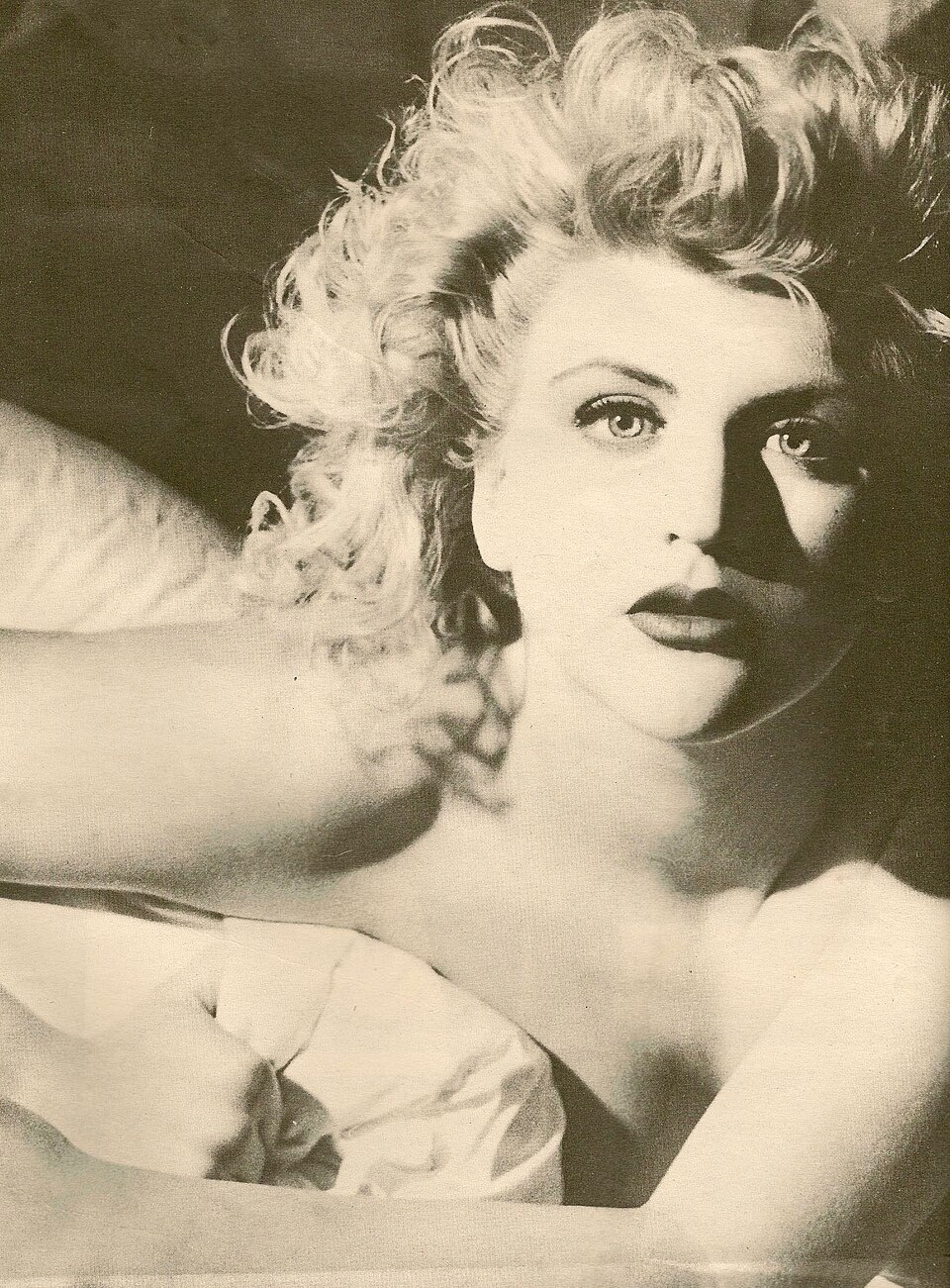
Image Courtney Love: Island Pictures, Public domain, via Wikimedia Commons