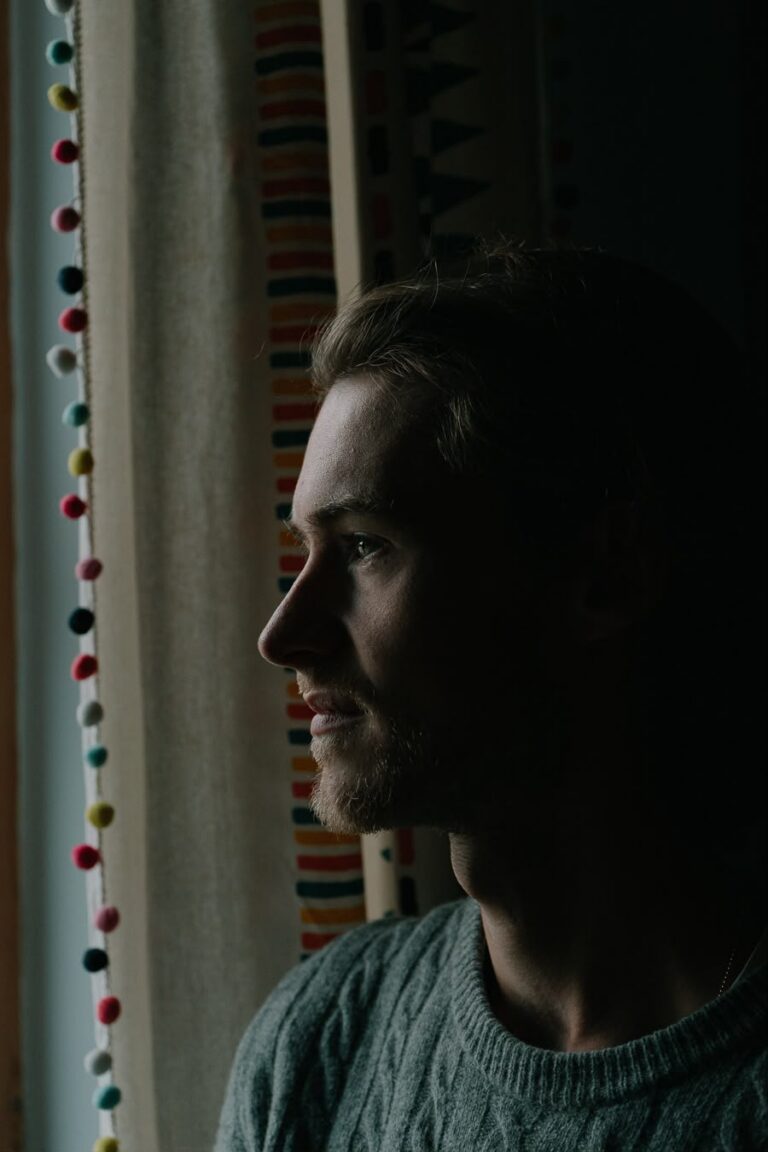
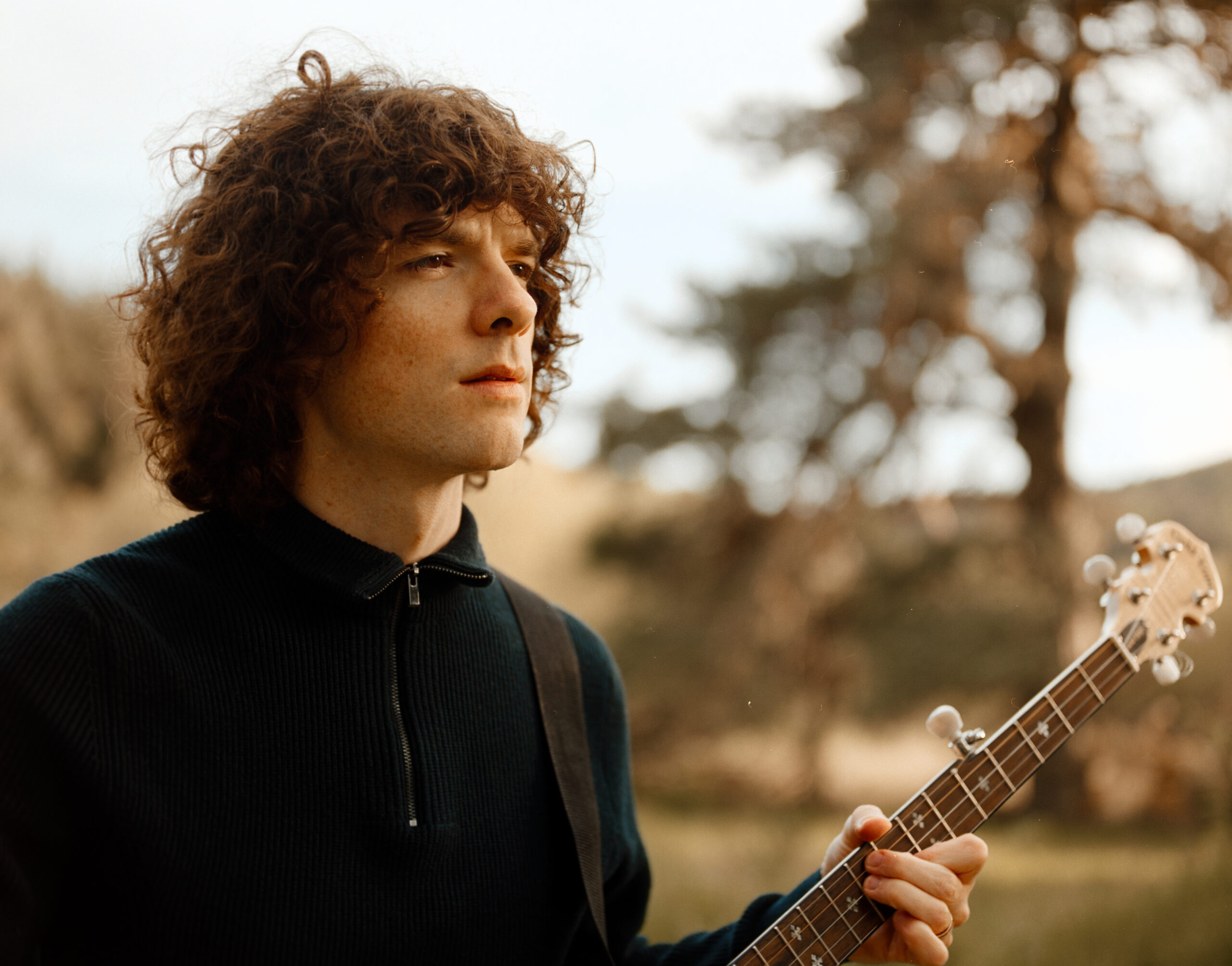
Dylan John Thomas (credit: Conor Gault)
INTERVIEW | DYLAN JOHN THOMAS by Anne Kelly
It’s been a wild few years for Dylan John Thomas. From busking on Glasgow‘s busy Buchanan Street and sneaking into pub open mic nights, to climbing the ranks from a 300-capacity King Tut’s to a three-night residency at the legendary Barrowland Ballroom – with nothing more than a couple of EPs under his belt – going on to drop a debut album alongside a sold-out OVO Hydro show, Thomas is set to do it all over again. This Friday, 9th October, he releases his much-anticipated sophomore album, Nothing Here Worth Taking, and makes an iconic return to the Barrowland Ballroom to celebrate in style.
Talking to Dylan ahead of the chaos of his second album, there is none of the frantic industry burnout or rehearsed swagger you might expect from someone headlining arenas in their twenties. When the whirlwind of his first album campaign finally wound down, he bought a banjo, hit the road and stopped by every golf course in Scotland he could find.
“Going from playing to thousands of people one night to nearly greetin’ on the putting green the next morning – it’s probably my biggest humbler”, he laughs. “I look at the golf swing like pure physics. I’ve always had quite a mathematical brain, but with guitar, I’ve played since I was nine or ten, so that lives in an entirely different part of my mind. With golf, I had to deconstruct it completely. It’s like learning an instrument: you hit these long plateaus where you don’t feel like you’re getting any better, and then suddenly you get a breakthrough.”
Absorbing traditional Scottish folk tunes on his travels, Thomas found himself captivated by the rhythmic interplay of the five-string banjo: “Moving to banjo wasn’t completely unfamiliar because I came from a fingerpicking background on the acoustic”, he explains. “The thumb holds down that driving bassline while the fingers pick out the melodies on top. The banjo just felt like a cousin to the guitar.”
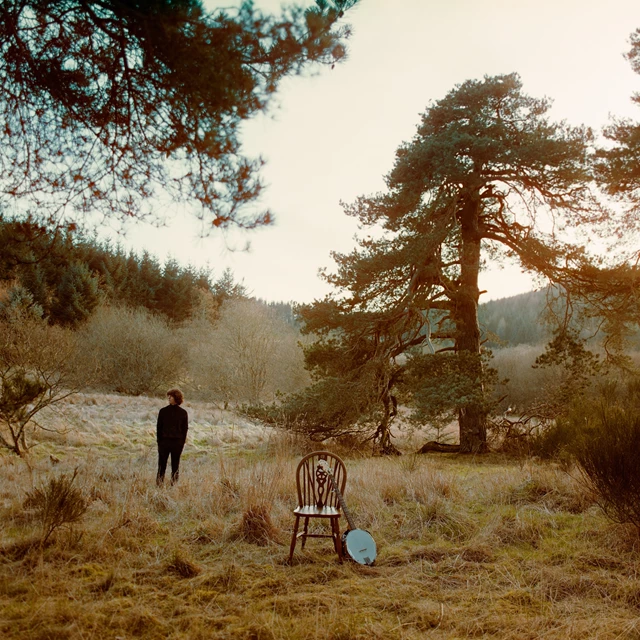
Those rolling, rhythmic patterns quickly became the foundation of his second album. “On the last album – without getting too technical – it was much more focused on the rhythm side as opposed to picking out the lead. Some of my greatest guitar heroes – Lindsey Buckingham [Fleetwood Mac] is one of them – use a lot of lead lines within the fingerpicking rather than treating it like a separate thing.”
Expanding on his guitar influences, he continues:
“Mark Knopfler also gets massive credit, and rightly so, but Lindsey Buckingham doesn’t get brought up half as much as he should. I think because Fleetwood Mac had so much going on, people overlook what he was actually doing on the fretboard. He could make one guitar sound like an entire rhythm section with lead lines woven into the picking. That, to me, was always far more interesting than just standing there playing with a wah pedal.”
With flashes of ska-style brass arrangements, and even subtle nods to ’90s dance grooves on tracks like the recent single ‘Come and Get It’, the new album sees Dylan expand sonically without diluting his trademark folk-skiffle. Growing up with records by Madness and The Specials, Dylan’s influences range from Johnny Cash and The Beatles to bands like Dire Straits and Fleetwood Mac. That musical journey came full circle in surreal fashion after he supported Ocean Colour Scene.
“Steve Cradock, who was a founding member of Ocean Colour Scene, played with The Specials when I saw them as a kid”, Dylan recalls. “I met him on that tour, which was mad enough. But then he asked for my address, and a few days later, this massive box turned up at my door. Inside was the actual 12-string guitar he’d used to record some of Ocean Colour Scene’s biggest albums. A proper full-circle moment.”
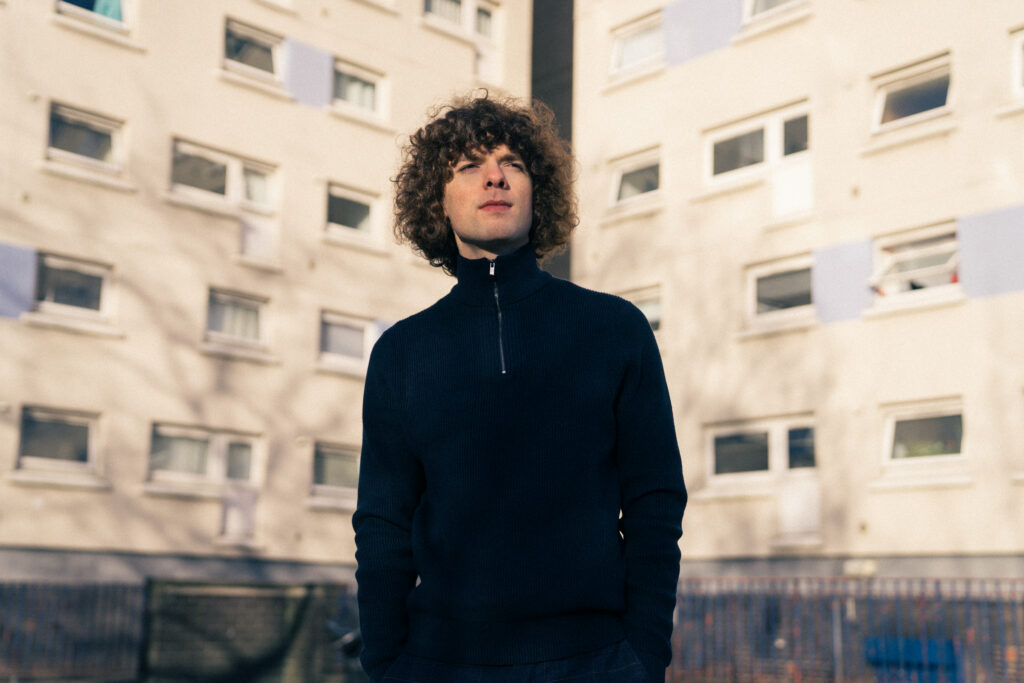
Lyrically, the new album balances observational storytelling with the raw honesty that has always defined his writing. While his debut processed his upbringing in the Scottish foster care system, the new songs cast a wider net.
“The first album was cathartic, dealing with childhood stuff and being in care, but I don’t think that ever really leaves you as a songwriter”, he says. “There’s always something on your chest. It’s not like you go to therapy, write one record, and suddenly get second-album syndrome because you’ve run out of things to say. Life keeps happening.”
Probably the biggest shift on this record is the construction process. Until now, Dylan’s songwriting process was fundamentally road-tested, forged on the stage; arrangements were laid before an audience long before a tape machine ever rolled. This time, the four walls of the studio came first.
“It’s interesting you bring that up”, Dylan reflects. “I think when you’re playing live a lot, you’re in that mindset of, like,’ how would this work within the set?’
The first album was about building up that live set. In terms of the recordings, we never really put a lot on it. The reason was that there are only four of us on stage, and there’s only so much sound that we can make.
By the time we were recording, we had played these tunes live before, so we already had this preconceived idea of how they should sound. This time around, we didn’t know how these songs sound live, so there’s a bit of free rein, maybe. It’s been a different experience, but there’s no right or wrong way to do it.“

Despite the assumed pressure to match the runaway success of his debut, Dylan’s feet remain firmly on the ground. Much of that groundedness comes from watching his longtime mentor and close friend, Gerry Cinnamon, navigate the industry without compromising his independence.
“Touring with Gerry all the way up to arena level taught me so much”, he says. “He showed that you don’t need to bow to labels, publishers, or the usual industry machinery. It all comes down to the tunes you write and the connection you make with people in the room. He showed us you can do it entirely your own way.”
While younger acts are increasingly forced to operate as daily content creators on TikTok, he prefers to let the live set do the talking.
“I’d lose my mind if I tried to navigate all that”, he admits. “It’s a tough spot for kids coming through now because everything is documented from day one. You need space to figure out who you are, to play small 300-capacity venues like King Tut’s, and, honestly, to just be a bit rubbish for a while until you find your feet.
We were quite lucky back then because we could afford to be a bit shite”, he says with a dry, self-deprecating grin. “We were so bad at the start—just shouting through the mic. But it was an apprenticeship.”
With an intimate run of in-store appearances, a homecoming celebration at the Barrowlands, and another massive night at the Hydro on the horizon, Thomas is right back where he feels most comfortable: in front of a crowd.
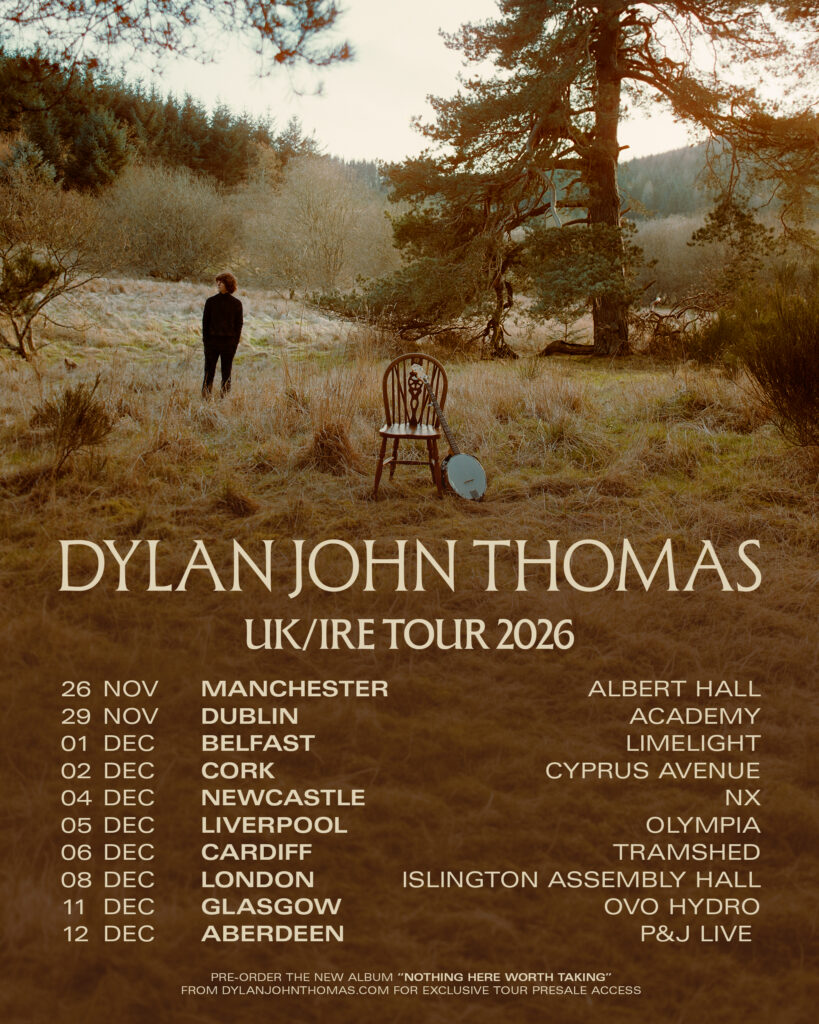
What would that teenage Dylan, freezing on Buchanan Street, guitar in hand and a handful of tunes, say if he could see the Hydro poster today?
Letting out a hearty laugh, he says, “He’d probably ask, ‘Is he still alive?’ I don’t think I would have believed it. But deep down, the dream was never about the size of the room. It was just to tour, to make a living playing songs, and to keep the band on the road. The rooms have gotten a lot bigger, but that feeling never changes.”
The brand new album from Dylan John Thomas, Nothing Here Worth Taking, is out Friday 9th October via Believe Music. Pre-save/order your copy now.
Catch Dylan back at Glasgow’s Barrowland Ballroom this Friday for the official album launch – final ticket bundles available here.
About the Author