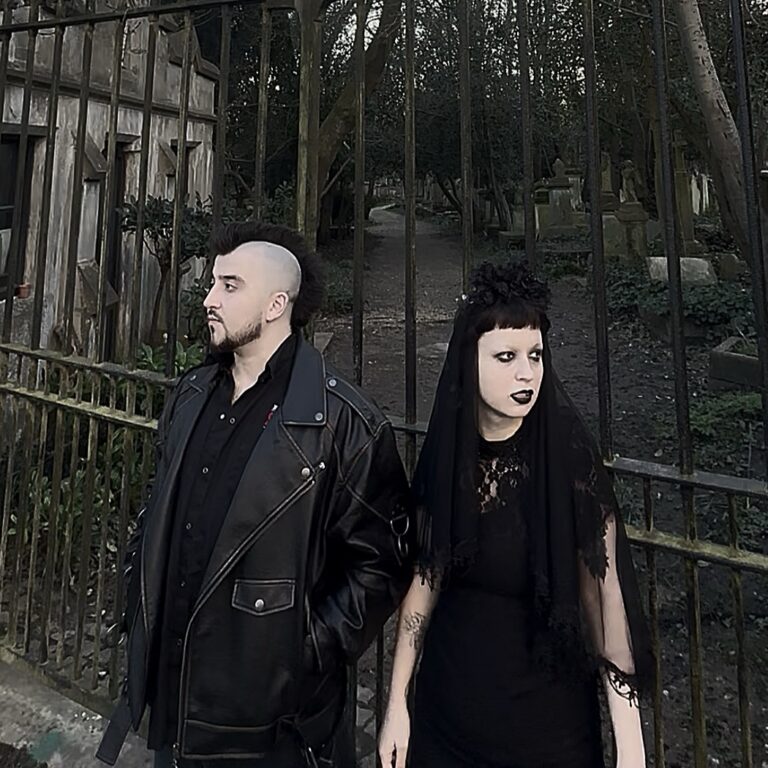

Yesterday I spent the day looking through master’s programmes in journalism across the UK. On paper I meet the entry requirements, so the real question is whether I should take the plunge. I started NE at the end of 2015. I’d just got divorced, was already writing for other blogs, and woke up one morning deciding to launch my own magazine. I’d grown up in the music business, my grandad was a booking agent and I spent my childhood watching bands, so once my kids were older it felt like the most natural thing to do.
At the time I didn’t want my ex-husband looking over my shoulder, we’d parted on as okay terms as it can be, but I saw this as a fresh start, something for me and me only, so I published under a synonym: my middle name Rachel and my mum’s maiden name Brown. It took off quickly and we made some money from it for a while. I later moved it to non-profit when I realised I couldn’t take bands’ money if I didn’t believe in them. Opportunities were there still are there), but I felt like a fraud promoting and writing positively about a band or music that I thought was poor, so I chose integrity over income.
What I’m now weighing is whether another year of study would interfere with what I already do. Was only a year or two ago I completed a degree in Psychology, Education and Therapy, can I do another year? Then there’s things like being able to name at least ten extremely successful people (probably more) working high up in the music industry with no music-related qualifications; they learned on the job. A lot of it isn’t what you know, it’s who you know. I’ve watched it play out, and that’s simply how it is. I guess it doesn’t help that I don’t kiss arse, but I pride myself on the fact that I don’t.
For years and years, the consistent message we’ve been getting from experts has been the same when it comes to things like this. Educate yourself, develop the skills necessary for success, gain qualifications. Well, none of them seems prepared to state outright what training programmes, internships, apprenticeships, etc assume. That everyone begins at 21 — hello, ageism. It never occurred to me till I was in it how thoroughly we exclude people like me by structuring programmes to automatically favour younger candidates. We build a system where everyone knows the rules except those born twenty years earlier.
At music festivals last year I kept having the same conversation with older photographers. They said the job had stopped being about the picture and turned into content: something to post, count, and replace. “They let anyone in the pit.” Quality no longer matters; it’s TikTok followers. That’s depressing, and I don’t think they’re imagining it.
What I had wrong was the next bit. Engagement isn’t meaningless. When a brand or artist reaches people directly, that engagement can influence sales, though it does so unevenly and mostly helps whoever already has the big following. It becomes meaningless when you treat the numbers as proof that someone’s work will actually sell.
A huge portion never goes anywhere outside of the circle. Features, credits, sell-out shows, sharing: it’s the photographers, PRs, labels and collaborators keeping each other seen. It seems like demand. Many times it boils down to strength of professional connections. Fans have moved on from magazines and venues alike and go directly to the artist. Magazines can serve as an introduction, festivals too.
Part of it is probably convenience. Younger applicants are treated as lower-risk investments because employers assume they have longer careers ahead of them, fewer expectations about salary and working conditions, and can be moulded around the culture that already exists. Whether those assumptions are true is almost beside the point. If enough people making hiring decisions believe them, those beliefs become reality. It’s recruitment based on potential rather than ability from day one, and soon enough youth becomes synonymous with possibility anyway. Experience isn’t assessed objectively. Rather, it’s proof that you’ve gotten into the wrong boat. It’s ridiculous.
The same logic shows up in recruitment. Employers hire for speed, for visibility, for whether you’re already connected to the right people, because those are the signals modern systems can measure. Experience didn’t suddenly become worthless. It simply stopped matching the thing being rewarded. The role might ask for judgement, expertise and professional resilience, while the hiring process prioritises networks, momentum and evidence that you’re already circulating within the right circles.
Look at Sony Music UK’s internship programme, supposedly inclusive towards career changers. Or the Beggars Group trainee-ship. Positive language. Welcome gestures. Yes, please. However, Sony positions this training as a great opportunity for “the next generation of talent” as their “first step into the music industry,” while Beggars openly welcome applications from people with little to zero industry experience. So which is it really? Opportunities remain available, but marketing campaigns are geared towards specific demographics. Meeting criteria isn’t equivalent to fitting someone’s idea of what a candidate looks like; only recently have I realised that difference properly. Passing criteria and fitting expectations aren’t synonymous terms, but sometimes we only learn those distinctions once we’ve paid for the tuition fees ourselves.
Most other UK schemes, from AIM Amplify and label apprenticeships to BBC Introducing, graduate programmes and Women Make Music, still target younger or early-career entrants, so inclusion language is common while structured opportunities for people with significant existing experience remain limited.
The same pattern shows up in PR. A 2025 CIPR report found only about 21% of UK practitioners are over 50, and 62% of those over 45 said age had hurt their progression. The industry views older candidates as less creative or digital, and adverts emphasise phrases such as ‘rockstar’ or ‘digital native’ that imply a youthful culture. Recruiters tell people to condense their CVs because employers don’t want to see all of that. Experience is framed as a liability rather than an asset, and the effect is sharper for women.
So do I waste a year pursuing a master’s degree? Will a further qualification genuinely change perception, or is it just another item to add to a CV showing off year’s worth of hands-on experience along with qualifications? What it all boils down to is learn valuable skills, earn credentials, enhance employability. Only nobody ever bothers addressing the situation where you have completed every step along that route and found yourself out on a limb anyway.
This issue runs wider than music. The Centre for Ageing Better’s 2021 report Too Much Experience found that 36% of people aged 50–69 felt disadvantaged by their age when applying for jobs, 48% thought recruitment practices work against older candidates, and 29% felt pigeonholed as having “too much experience.” A later poll put the average age at which someone stops looking like a desirable hire at 55. None of the schemes turn you away for age directly, but the logic does the work anyway: experience is treated as a disadvantage. Age rarely gets named. It shows up as “too experienced,” “overqualified,” or “not the right fit.” Language changes, the outcome doesn’t.
Everyone is rushing to nurture new talent, develop innovative approaches and widen access to opportunities. Increasingly, though, it feels as if age is the one characteristic those conversations are unwilling to confront directly. Except we rarely discuss how age plays into all of this, and “too much experience” becomes shorthand for politely rejecting candidates. We proclaim to seek fresh perspectives, but we discount the very value of experience acquired before application.
That’s what really fascinates me. Age doesn’t come up directly. You don’t get a form letter saying the candidate is too old. It becomes coded into other terminology. Age is simply a proxy for something else. Too experienced. Overqualified. Unlikely to be a cultural fit. Not quite right for the programme. Language evolves, results stay the same. We convince ourselves that we are analysing our experiences objectively, but meanwhile we treat our very acquisition of experience as problematic and in need of explanation.
Music career-building is inherently linked to processes and abilities that cannot be acquired overnight. Networking capacity, cultural literacy, resilience, judgement, and the ability to navigate complicated professional environments all develop over time. Those are precisely the qualities mid-career applicants are likely to possess in abundance.
Which leaves me back where I started, looking at master’s programmes and still not sure if I should do it. I meet the criteria. I’ve got the experience and I know what the work actually asks once you’re in. I’m less convinced that another qualification would change much, since the issue seems to be expectation, not ability. Would I get more respect? Probably. In music, people often treat qualifications as automatic proof of superiority, I’ve watched that play out too many times in press areas. We’re always told talent doesn’t fade with age, and I believe that. So maybe the question isn’t why older people struggle to get these opportunities. It’s why so many of them are still built as if people with experience were never meant to need them. The programmes, the internships, the “next generation” language all treat the main problem as getting young people through the door, not supporting or bringing in people who already know the work.
About the Author