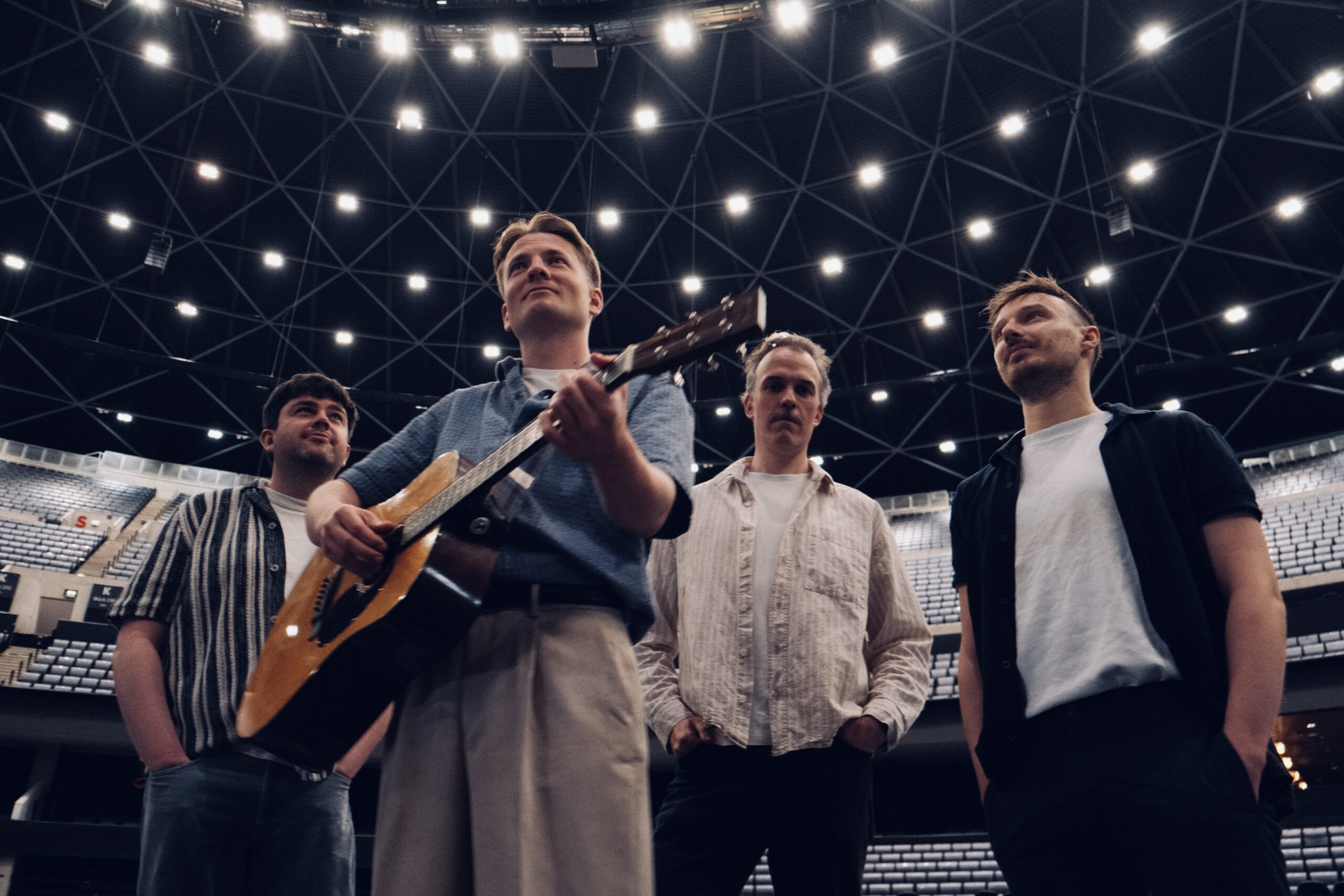
Tide Lines by Nathan Dunphy
INTERVIEW | ROBERT ROBERTSON – TIDE LINES by Morgan Hermiston
A few weeks ago, I had the opportunity to interview frontman of Tide Lines, Robert [Rob] Robertson. The band have had four Scottish number one albums to date, which is an incredible accolade to achieve. They also played one of the biggest headline shows of their careers in Glasgow’s OVO Hydro, and are setting off again to continue the celebrations surrounding a decade as Tide Lines. We spoke about them going independent as a band, BBC Alba, and combining culture and music.
Fourth Scottish Number One
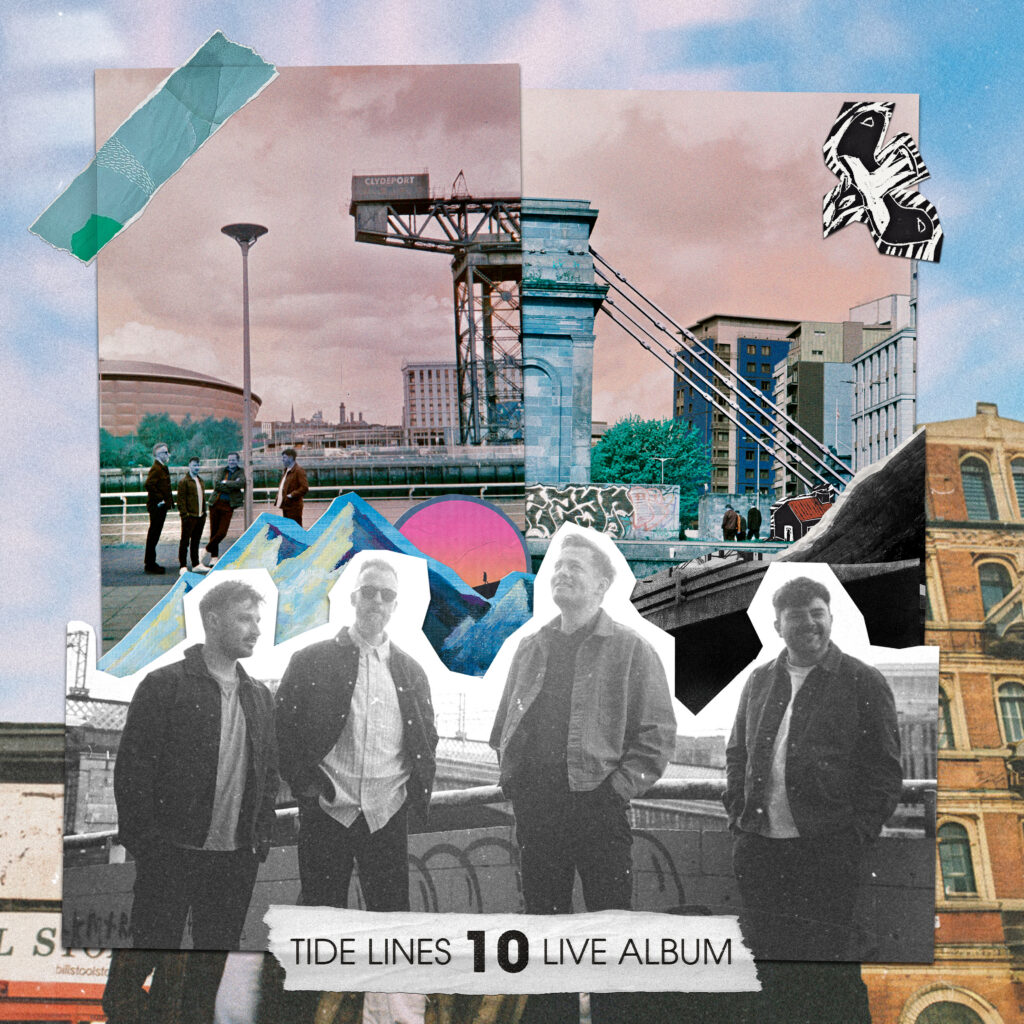
I started by asking Robert about their most recent album 10, which is a live album. This record gained them a fourth Scottish number one as Tide Lines. I asked how that accolade felt for him.
“It was really big surprise, quite genuinely. I know people say that a lot when you get something, ‘oh I’m shocked’, but we genuinely were because it was a live album, you know, it wasn’t a studio album. So (A) we didn’t give it the big build-up of promotion that you do for a new studio album, and (B), it’s essentially songs that all our fans have already heard before because it’s, you know, it’s live gigs. We were quite amazed at the numbers that supported it, and streamed it and bought it physically.”
“With our previous three studio albums, we’ve had it in our minds that we might get a Scottish number one here, because we’ve had good UK chart positions where we’ve charted at, like, 11 and 12, but this one was… we didn’t even think about charting it, it was just something to mark our 10th anniversary, so it was a great surprise.“
Becoming an Independent Band
This latest record, though it is a live album, was released independently through Tide Lines Music. I asked Rob how important this has been for him and the band, especially as Scottish talents.
“Yeah, it’s been great. We did one album through a label, but I think we work really well, the four of us, just delegating all the various tasks…that a record label or, you know, an independent band releasing music has to do. We record over on Island of Mull. Ross [Wilson] and the band pretty much produces everything. I write the songs and then from there on, you know, the merchandise, the packaging, you know, we all get it all sent to our flat in Glasgow and sign all the copies ourselves and stuff.”
“And we actually really enjoy the DIY aspect of it. And it gives us a really strong connection with our fans because it’s us that’s actually dealing with them a lot of the time. We’ve obviously got distributors and, you know, various teams that work with us and PR, you know, we’ve got marketing people and stuff, but it’s nice to have our own control over all that.”
Evolving and Expanding
As with many industries, musicians and bands often have to adapt their approaches when it comes to marketing and sharing their art. Rob and I chatted a bit about social media, and how evolving with the times works for the group.
“Well, it’s certainly evolved in the sense that there’s more albums to sign these days than there were when we released our first album, which is nice. The music industry changes, obviously. Social media is, you know, such a much bigger thing now than it was. In terms of TikTok, we’re not necessarily the best at that. Ten years ago, I think we were great on social media that was there then. And I think now there’s bands that are younger than us that have got the TikTok thing down a lot better than we do.”
I mentioned that I don’t use that app at all, but previously I did discover a few new acts. Rob said, “I think you and I are kind of similar there, we do what we need to do on TikTok.” He continued, “I think now a lot of bands that are kind of breaking and things, it’s like, they’re on there every single day, sometimes like half a dozen times a day. That’s not the way we were brought up. It’s very repetitive as well. It’s like, here’s one, like, 10 second clip from a song and it’s the chorus. And everyone likes the chorus and no one knows the verses.”
Growing Together as a Band
We then spoke about growing as individuals and as a band, Rob said, “Yeah we’ve definitely grown together over the last 10 years. When you’re in a band, you spend a lot of time together.” He added, “In the Spring there, we were away for two months, just in the van together. I think our relationships have grown over the 10 years to the point where we’re now like brothers almost. We’re really close… we’ve never really had any fallouts and stuff.“
Rob continued, “I was actually looking back at a couple of interviews that I did at the start of Tide Lines recently. The answers I give now would be entirely different to what I gave then. I suppose, yeah, we have changed. But, essentially, we’re still very much the same, you know, the same people.”
Highlights Over the Years
I asked Rob about any highlights or points over the last ten years that really stand out to him. He began by talking about the multiple Barrowland Ballroom shows they’ve played throughout their time as a band. “I always think our first ever Barrowland show felt like a moment where… we’ve got to that level that we really wanted to be at, where we can sell out at Barrowlands. A couple of years after that, we sold out three nights [at Barrowland Ballroom] and they inducted us into the Hall of Fame. [It’s] such an iconic venue that always stands out as a highlight.”
Continuing, he said, “There’s been big festival shows that we’ve loved doing over the years, and also particular dates on bigger tours. We did the Shepherd’s Bush Empire in London last year. That was almost 2000 tickets in London. At that point, you know, that feels almost more amazing than doing it in Glasgow because you can get your head around the fact that… people turn up to hear you.”
He also said, “when we go to Europe… the numbers are slightly smaller. You go to Denmark, you go to Holland, you go to Germany and Belgium, it’s just amazing that people turn up to hear our music and that’ll never cease to amaze me.”
The Legacy of Tide Lines
We had a little chat about what he thinks has afforded the band to continue on into its tenth year. “I mean that’s down to our fans, really, because that’s the long and short of it. We wouldn’t still be able to do this if people weren’t turning up to hear our music and we’ve got a really supportive fanbase who will do anything to help us.”
“I guess COVID’s probably as close as it came to not being able to continue. We didn’t play a live gig for a year and a half, you know, and it was just a quite crucial point in our development where we were beginning to sort of play bigger gigs and then all of a sudden that all stopped. At that point we released an album and our fans were supporting us online.”
“Then I even think back to our last album, Glasgow Love Story, not the live one, but our last studio album, and we did a busking thing in Glasgow and it turns out it was pouring rain, like it was a blizzard, it was horrendous, but again they all turned up, all those people, and stood with umbrellas and waterproofs. So yeah, rather than anything we’ve done in particular, I think we’ve just got to be grateful to all those people who like our music and support it.”
Dream Festival Lineup
At the time of the interview, Tide Lines had a couple of festival slots still left to play. I asked Rob what his dream festival lineup would look like. “Great question,” he said, “I’d put The Waterboys in there, first and foremost. I saw them first when I was about 16, 17. I’m a big fan of Mike Scott’s songwriting, but The Waterboys were just amazing live. Steve Wickham on the fiddle, dancing about the stage, and Anthony Thistlethwaite‘s saxophone playing.”
“The Killers, I saw them at TRNSMT a few years ago, it was probably the best gig…the best festival gig I’ve ever seen. I then saw them in the Hydro, which was another great gig, but on the festival idea, I thought they were phenomenal.”
For his final headliner, Rob said, “I’ll go for The Fratellis, another Scottish band. I’ve seen them at a number of festivals. They’re so good live, I think Jon Fratelli has got an unbelievable, sort of, charisma with his hat on, he’s kind of mysterious. They’ve also got…the three girls that do the backing vocals are amazing.”
Speaking Gaelic and Traditional Music
Rob has featured on BBC Alba, speaking Gaelic, where he has done programmes like bringing in the New Year. I asked him whether speaking the language, and more traditional aspects of culture and music, have been a lifelong interest, or more recent.
“It’s been a big part of my life for a very long time. As we spoke about, I was brought up in Fort William in the Highlands. My mum and dad didn’t speak Gaelic, they were from Stirling, in the central belt. As a kid, I was always singing… folk songs at local concerts and stuff. When you’re in the Highlands, there’s always Gaelic singing at those events, whether it’s Ceilidhs or concerts. So, I actually got into Gaelic music when I was 11 or 12 years old, then learned a bit of it in school.”
He continued, “I studied English at uni, but I learned a bit of Gaelic at uni as well. So I’m fluent enough to do things on the telly and stuff, but it’s not like I’m a native speaker.” Musically, Rob added, “Gaelic melodies are very, very simple. Many of them have gone through dozens of generations, over hundreds of years, have been passed on orally. I think that’s maybe the basis of a lot of our music, that, kind of, simplicity of melody and sing-a-long choruses.” Concluding, he said, “I’ve got so many influences, but Gaelic’s definitely always, always going to be one of them.”
Traditional Acts We Should Be Listening To
Off the back of chatting about speaking Gaelic, I was interested to know if there were any musicians or bands of a traditional style that he wanted to highlight. Bands like Mànran feature a lot on the likes of BBC Alba, but who are some others we should be listening to?
“Oh, wow. Yeah, I mean, it’s a great scene because we’re all kind of pals and stuff. So Mànran, Skerryvore, these guys all do, you know, brilliant stuff. If you go back a generation, Runrig as well. I would just say Celtic Connections, those kind of things. There’s always a lot of folk music involved there and it’s worth going to hear that”. On Skerryvore, he added, “They are traditional, they’ve got accordions and fiddles and stuff, but they don’t actually sing any Gaelic.” He also said, “going back to old Capercaillie records, when I was younger, my dad had a Capercaillie cassette in the car. Karen Matheson still sings today, and they’re a good entry into Gaelic.”
In terms of Tide Lines, Rob said, “I write my songs in English, because my Gaelic probably isn’t good enough to [sing]. We always try to include a Gaelic song somewhere in the set, just to say ‘this is where this part of our sound came from’. The rest is, kind of, informed by that. Gaelic is always part of the foundation of Tide Lines..
If you missed Tide Lines’ headline show at Glasgow’s OVO Hydro in September, you can still catch them live this year! These shows extend the tenth year celebrations until the end of the year in cities like Stirling, Dundee and Paisley. You can find tickets for these shows here, and more information below.
About the Author